What this page lists
This page collects 53 fully funded PhD scholarships open to Nigerian students. Every award here is labelled fully funded, and every award here is at doctoral level. That combination is the whole point of the collection: you are not filtering through partial tuition waivers or master's-only awards to find the ones that fit a doctoral applicant.
The 53 awards are not all PhD-only. Alongside them, the same providers also run 42 master's awards, 20 bachelor's awards, 5 fellowships, 5 postdoctoral positions, 2 high school programmes and 2 short courses. If you are still deciding between a master's and a doctorate, the master's awards on the same pages are worth reading before you commit to a research proposal.
Who can apply
All 53 awards are open to Nigerian applicants. For 49 of them, the award text places no nationality restriction at all — the funding is tied to the programme, the supervisor or the research group, not to a passport. The remaining 4 name Nigeria or the region directly in their eligibility wording.
None of the 53 states an eligibility rule that would exclude a Nigerian applicant. That is the practical meaning of "open to Nigerian students" on this page.
The qualification that leads into this level is a master's degree — an M.Sc, M.A, MBA or M.Phil. Funded doctoral places and research scholarships are often tied to a supervisor or a research group, which means the programme application and the scholarship application frequently share one deadline. Budget your time accordingly.
What the awards pay for
Fully funded means different things at different institutions. Here is what the awards on this page say in their own text:
- 33 name tuition or fees
- 32 name living costs or a stipend
- 20 name travel
- 20 name health insurance
- 17 name accommodation
- 8 name research or training costs
- 1 names a settling-in or arrival grant
Read those as what the award documents state, not as a promise that every cost you carry will be met. A tuition-and-stipend award that says nothing about travel leaves you paying for the flight. Check the individual award page before you build a budget.
Where the awards are
China leads with 7 awards. Australia, the United Kingdom and the United States each have 5. Canada and Germany each have 4, as does Thailand. Saudi Arabia, Turkey and the United Arab Emirates each have 3. Japan and Singapore each have 2. Denmark, Hungary, Ireland, New Zealand, Spain and Switzerland each have 1.
That spread matters for cost. A funded place in Germany or Hungary removes the tuition problem entirely; a funded place in the United States or Australia usually includes a stipend large enough to live on. The trade-off is in the application cost you carry up front — transcripts, courier fees, English test registration — and those are the same whether the award is in Asia, Europe or North America.
Fields of study
Engineering is the largest group with 9 awards, followed by medicine and health sciences with 8, and arts and humanities with 7. Business and management and law each have 6. Education has 5. Economics and finance has 4. Agriculture, natural sciences and social sciences each have 3. Computer science and IT has 1.
If your field sits in the smaller groups, the pool is thin but real. One award in your discipline is still an award you can win.
What the applications ask for
These are the requirements the awards state in writing, counted across the 53:
- 30 ask for letters of recommendation
- 24 ask for an English test score (IELTS or TOEFL)
- 14 set a minimum degree class
- 12 ask for a research proposal
- 4 require an admission offer first
- 3 ask for work experience
The two that catch Nigerian applicants most often are the English test and the degree class. Some awards waive the test where your previous degree was taught in English; check the individual award page rather than assuming either way. On degree class, a minimum requirement is a floor, not a target — a strong research proposal and referees who can speak to your work carry weight where the class is borderline.
Start your referees early. A letter of recommendation from a supervisor who has moved institutions, or who is travelling, is the most common cause of a late submission.
Deadlines
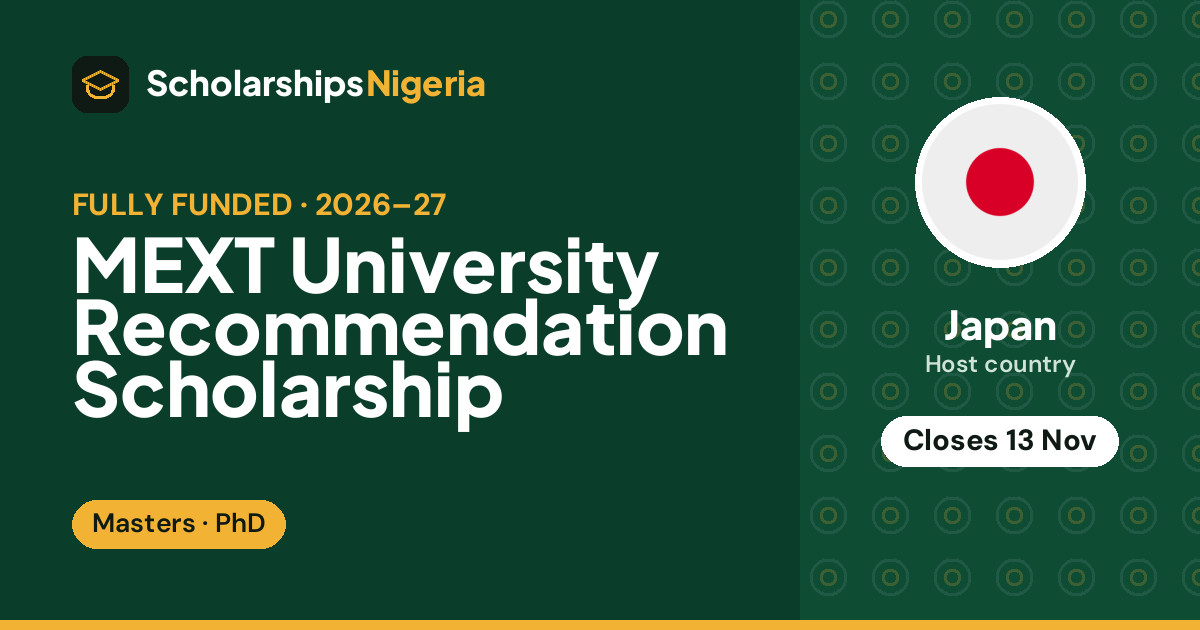
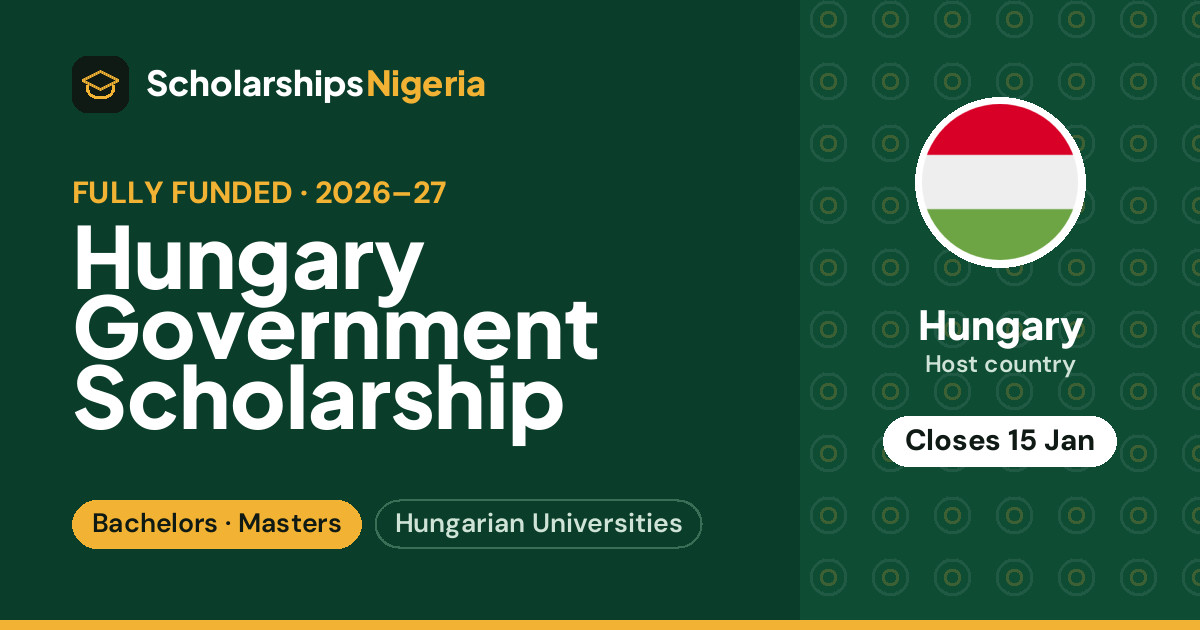
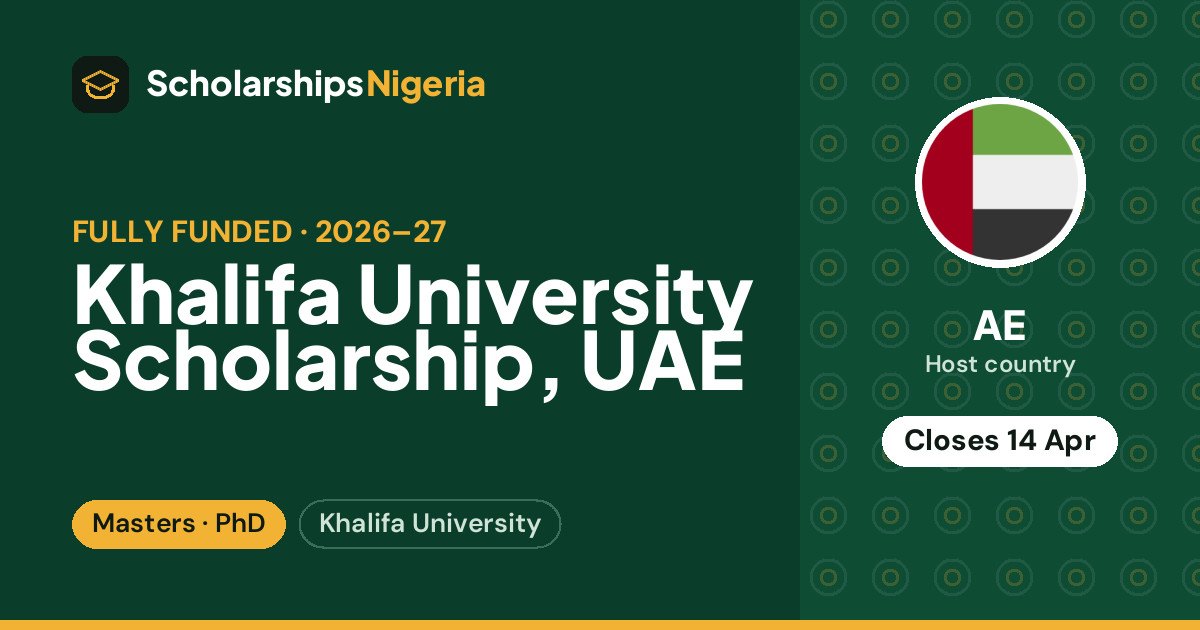
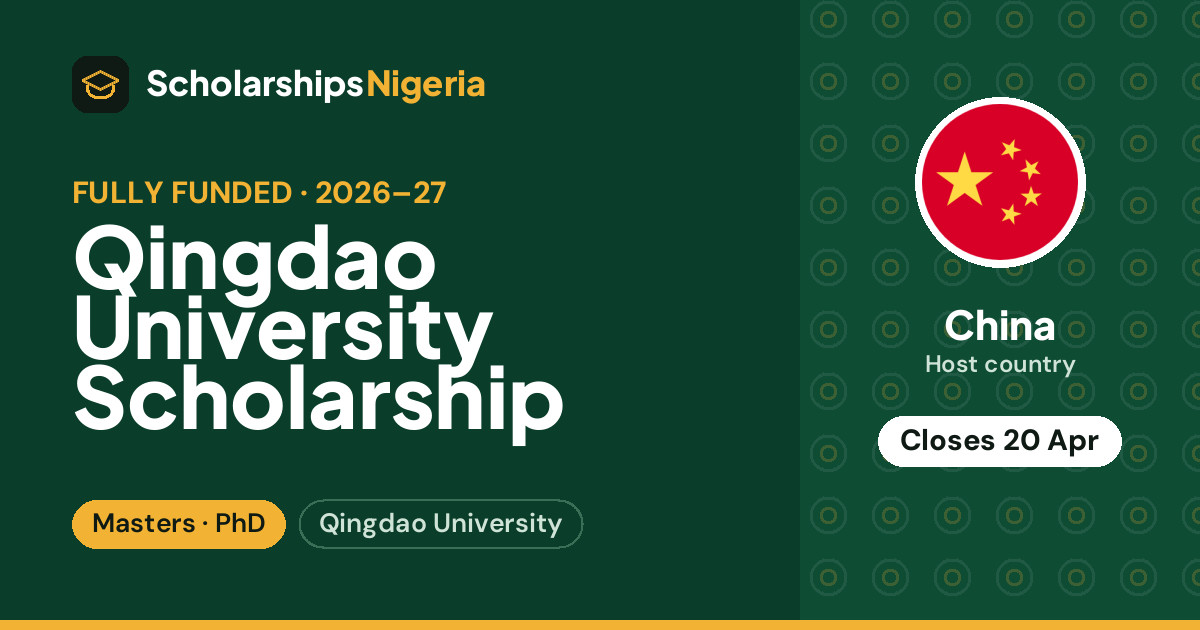
Of the 53 awards, 16 carry a specific date, and 15 of those are still open at the time of writing. 15 run on a recurring cycle, and 37 are undated — meaning the provider has not published a fixed closing date, so you work to the programme's own timeline. April is the busiest month with 4 deadlines, then October with 3 and November with 2.
The awards closing soonest:
Also on the list is the Leo Baeck Fellowship 2026-2027 Germany, a doctoral research fellowship with a closing date of 1 March.
How long the funding runs
Where awards state a duration, 3 run for 4 years and 2 run for 3 years. One states a PhD duration of 3.5 years with no extension available — if you are applying to that one, plan your fieldwork and writing-up so you finish inside the window. Another lists undergraduate at 4-5 years, master's at 2-3 years and PhD at 3-4 years.
Duration is the figure most applicants overlook. A four-year award and a three-year award are not the same offer if your research needs four years of lab time.
What to do next
Work backwards from the deadline, not forwards from today. If an award closes in October, your transcript request, courier and referee reminders need to be in motion weeks earlier — Nigerian universities do not always release transcripts quickly, and courier delays are outside your control.
Read the individual award page for anything you intend to apply to. Confirm the degree class requirement, whether the English test can be waived, and whether the award needs an admission offer before you apply. Where a supervisor is named, contact them before you submit; a doctoral place tied to a research group is often decided in that conversation.
Then pick two or three from the 53 and apply properly, rather than ten and apply badly.