What this page lists
This page collects 7 fully funded high school scholarships that are open to Nigerian students. Every award on the list is labelled fully funded by the provider, so the funding question is settled before you start reading individual entries. What varies is the country, the level the award actually targets, and what each one asks you to send with your application.
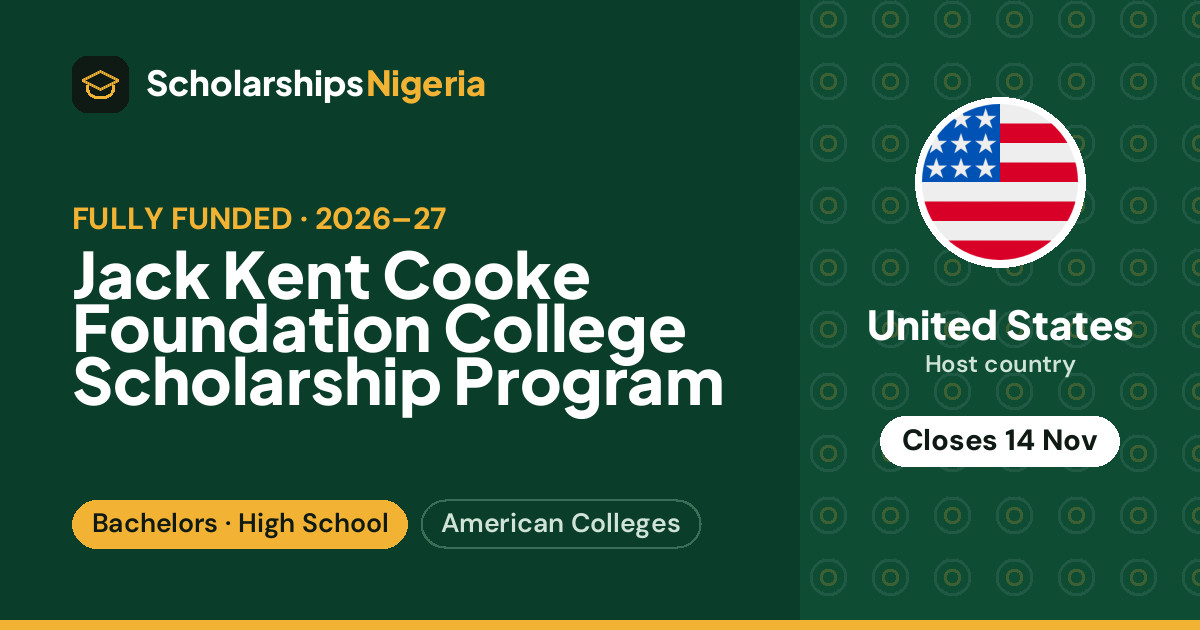
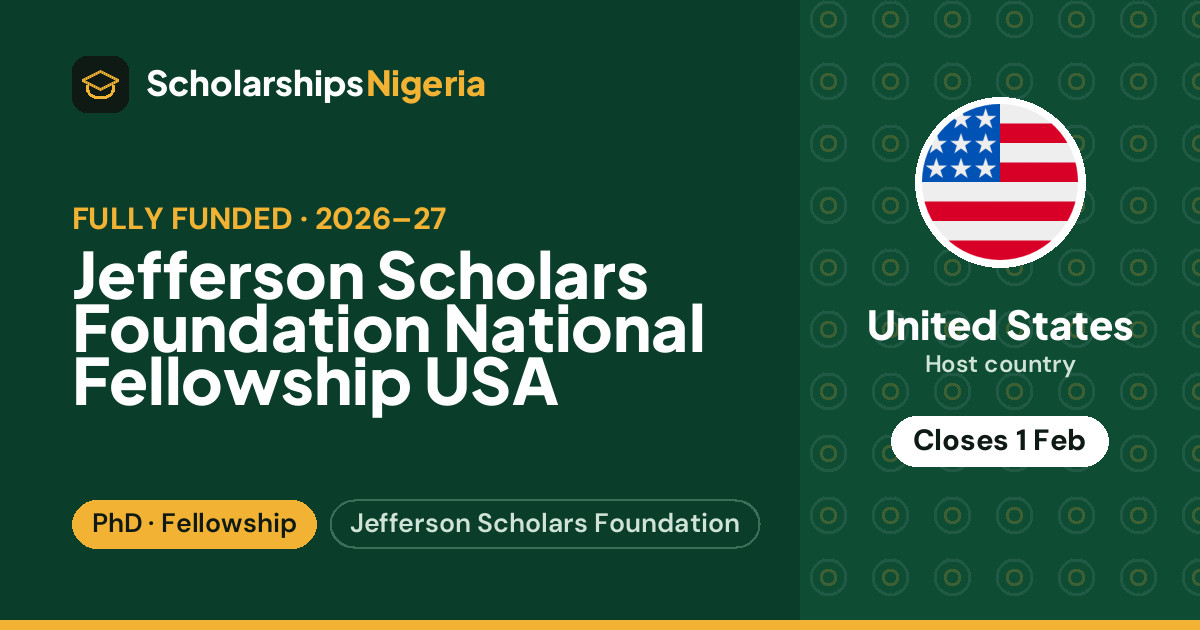
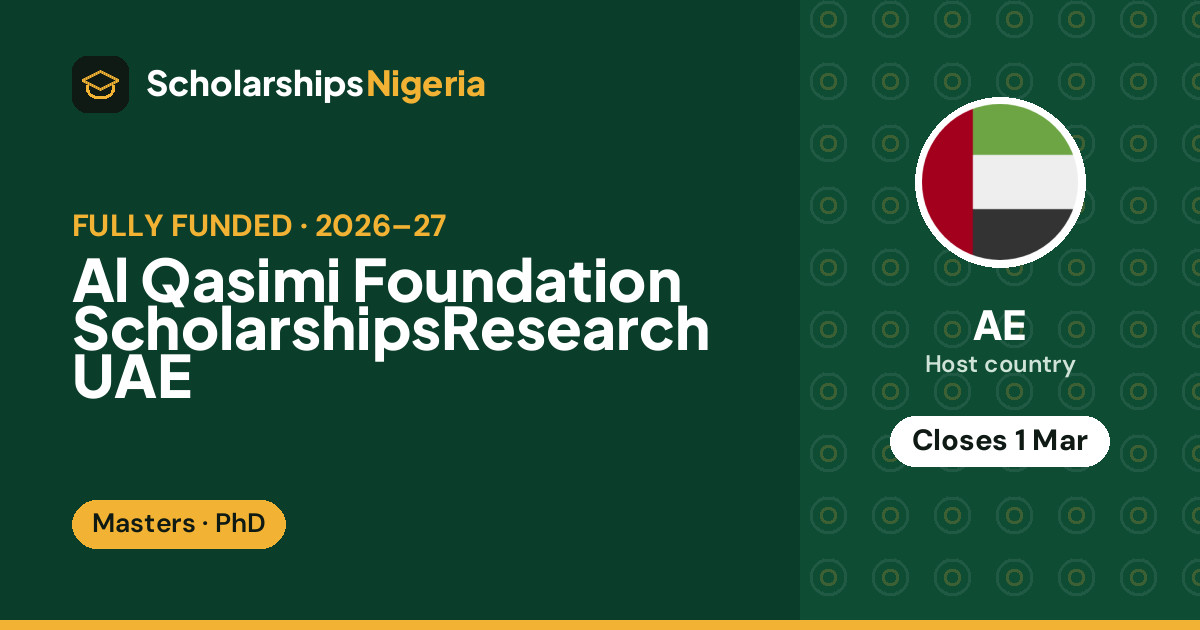
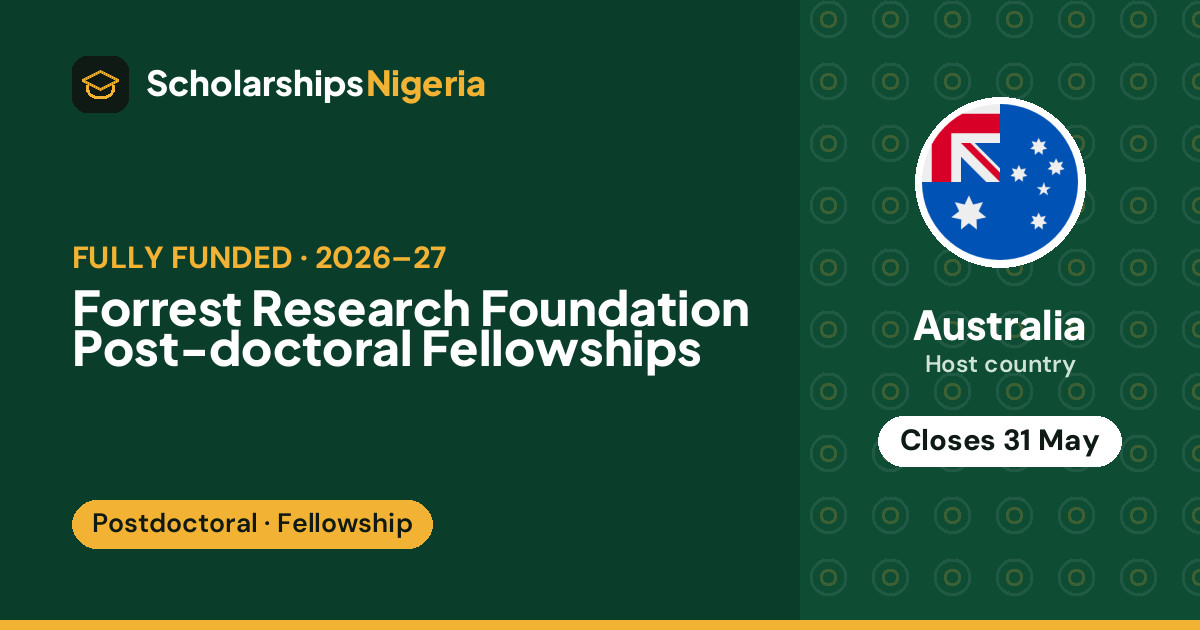
The awards sit in five countries. The United States accounts for 3 of them. Australia, Germany, Japan and the United Arab Emirates each account for 1. Providers include the Honjo International Scholarship Foundation, The Heinrich-Böll-Stiftung, the Sheikh Saud bin Saqr Al Qasimi Foundation for Policy Research, American Colleges, the ACI Foundation and the Jefferson Scholars Foundation.
One thing to understand before you read further: this is a small, mixed list. The level filter says high school, but several entries are written for students further along — masters, PhD, postdoctoral and fellowship stages. That matters when you decide which entries are worth your time and courier money.
Who can apply
Of the 7 awards, 3 are open to Nigerian applicants. Within that group, none names Nigeria or the West African region specifically; all 3 carry no nationality restriction at all. For the remaining 4, the award page does not state an eligibility position, so you cannot tell from the listing alone whether a Nigerian applicant qualifies. You will need to open those pages and read the provider's own criteria.
That split is the single most useful fact on this page. Three awards are clear-cut. Four require you to check the source before you spend anything on transcripts, postage or test fees.
What the awards say they cover
These are the benefits the award pages name in their own text. They are what the provider writes, not a promise about your particular offer letter.
- Travel: named by 3 awards
- Accommodation: named by 3 awards
- Living costs: named by 2 awards
- Research or training costs: named by 2 awards
- Tuition: named by 1 award
- Health insurance: named by 1 award
Read that list carefully. Travel and accommodation appear more often than tuition, which is unusual and worth noting. If your main worry is school fees, check the individual entry rather than assuming the phrase "fully funded" covers the same things everywhere. The brief does not carry a stated cash value or an award count for any of these entries, so this page cannot tell you what each one is worth in naira or in dollars.
What the applications ask for
Requirements are stated unevenly across the 7 entries. Where an award names a requirement, this is what it names:
- Letters of recommendation: 4 awards
- A research proposal: 2 awards
- An English test score (IELTS or TOEFL): 1 award
- A minimum degree class: 1 award
Letters of recommendation are the most common ask, and they are also the slowest thing to arrange from Nigeria. A referee who has moved institutions, changed email or gone on leave can cost you a week. Ask early, give them the exact deadline, and follow up before the portal closes rather than after.
Only 1 award names an English test score. That does not mean the others waive it — it means the listing does not say. Where a test is named, budget for it as a real cost: the test fee, the score-sending fee and the travel to a test centre all come out of your pocket. If you already hold a valid score, keep the date in view, because scores expire.
The research proposal requirement appears on 2 awards. Those are the entries where you cannot simply fill a form; you need a written piece of work with a clear question and method. Give that a fortnight, not a weekend.
Deadlines and how they fall
Five of the 7 awards carry a stated deadline, and all 5 are still open at the time of writing. Two entries are undated. Five of the awards recur, which means a missed cycle is not necessarily the end of the road — but you should still treat the current date as the one that matters.
The busiest month on this list is November, with 2 deadlines. February and March carry 1 each.
These are the awards closing soonest:
The Honjo International Scholarship Foundation entry in Japan runs a spring window from 2 September to 31 October. If you are reading this after that window has closed, the next cycle is the one to plan for.
Where the awards sit by level and field
The level filter on this page returns 7 awards, but the individual entries describe different study stages. The ACI Foundation entry is written for undergraduate, masters, PhD and postdoctoral applicants. The Jack Kent Cooke entry is undergraduate. The Jefferson Scholars entry is PhD. The Al Qasimi entry covers master's, PhD, postdoctoral and visiting scholar positions. The Forrest Research Foundation entry is post-doctoral. The Honjo entry covers master's and PhD.
Only 2 fields are named anywhere on the list: Business & Management on 1 award and Social Sciences on 1 award. Most entries do not restrict by field in the text we hold, so a Nigerian applicant from a science, arts or education background should read the individual pages rather than assume exclusion.
Durations are stated on a handful of entries only: 1 to 5 years on one, 3 academic years on another, 3 years on a third. Plan your funding and your family's expectations around the specific entry, not a general assumption.
What to do next
Start with the 3 awards that place no nationality restriction on Nigerian applicants. Those are the ones where your eligibility is not in question, so your effort goes into the application itself rather than into a query email.
Then work through the 4 awards whose eligibility is not stated on the page. Open each one, find the provider's own criteria, and confirm in writing before you pay for anything. A short email to the admissions or scholarships office costs nothing and can save you the price of a courier.
After that, build your document timeline backwards from the deadline. Transcripts from a Nigerian institution can take weeks, and courier delivery adds days on top. Recommendation letters need the same lead time. If a research proposal is required, that is the longest single item on your list.
Finally, note which awards recur. A recurring award that has just closed is not a lost cause; it is a date in next year's calendar. Use the gap to strengthen the parts of your file that take longest to fix — your referee relationships, your written proposal and, where needed, your English test score.
The list is short, at 7 awards. That is an argument for reading every entry properly rather than skimming titles, because the differences between them — level, country, what is covered, what is asked — are where your decision actually lies.