What this page lists
This page collects 5 short course scholarships open to Nigerian students. They are short in the sense that they are not full degree programmes: they are fellowships, non-degree study, diploma tracks and short research stays, alongside a few awards whose host universities also run degree programmes of their own. Every award here has been checked against the question Nigerian applicants ask first — can I apply, or is the door closed to me?
The answer, for all five, is that you can. Two awards name Nigeria or the West African region in their own eligibility text. The other three carry no nationality restriction at all. None of the five states an eligibility rule that would exclude a Nigerian applicant.
Who funds them, and where they sit
The five awards come from five different providers: Friedrich Ebert Stiftung, Hungarian Universities, Harrison Middleton University, the National Endowment for Democracy, and the University of Auckland. That spread matters. It means you are not competing for one pot of money, and it means the applications look nothing alike.
By country, the United States hosts two. Germany, Hungary and New Zealand host one each. If you have been working from a shortlist of one country only, this page widens it.
What the awards pay for
Three of the five are labelled fully funded. One is labelled partially funded. One does not label its funding either way, so treat that one as unknown until you read its own page.
Where the awards state benefits in their own text, the pattern is:
- Living costs — named by 4 awards
- Health insurance — named by 3 awards
- Tuition — named by 2 awards
- Travel — named by 1 award
- Accommodation — named by 1 award
These are what the award documents say they cover, not a promise that every cost you carry will be met. Read the individual pages for the exact wording before you build a budget around any of them.
What the applications ask of you
The requirements stated across the five awards are modest in number but specific in kind. Two awards ask for letters of recommendation. One asks for a minimum degree class. One asks for a research proposal. One asks for a commitment to return home afterwards.
That last one deserves a second look. If an award asks you to commit to returning to Nigeria after the programme, that is a condition you accept in writing, not a formality. Read it carefully before you sign.
The degree class requirement is the one most Nigerian applicants can plan around in advance. If you already hold your B.Sc or HND and know your class, you know whether you clear that bar before you spend a naira on transcripts. If you are still studying, that requirement tells you what your final result needs to look like.
Levels, and how short "short" is
All five sit at short course level. But the awards also carry degree-level links, which tells you what kind of institution you are dealing with: three connect to bachelors study, three to masters, two to fellowship, two to PhD, and one to postdoctoral work.
On duration, the brief gives us four stated lengths: one award runs nine months, one runs five months, one runs a year, and one describes a structure of two to four years for a bachelor's, one and a half to two years for a master's, and five years for a one-tier master. That last one is a degree pathway rather than a short course, so check which track you are actually applying to.
Only one award in this set states a number of places: Friedrich Ebert Stiftung lists up to 40 awards. The others do not publish a figure here.
Deadlines: two are close
Two awards carry a stated date, two are still open, three are undated, and two recur. The busiest months across the set are January and November, one award each.
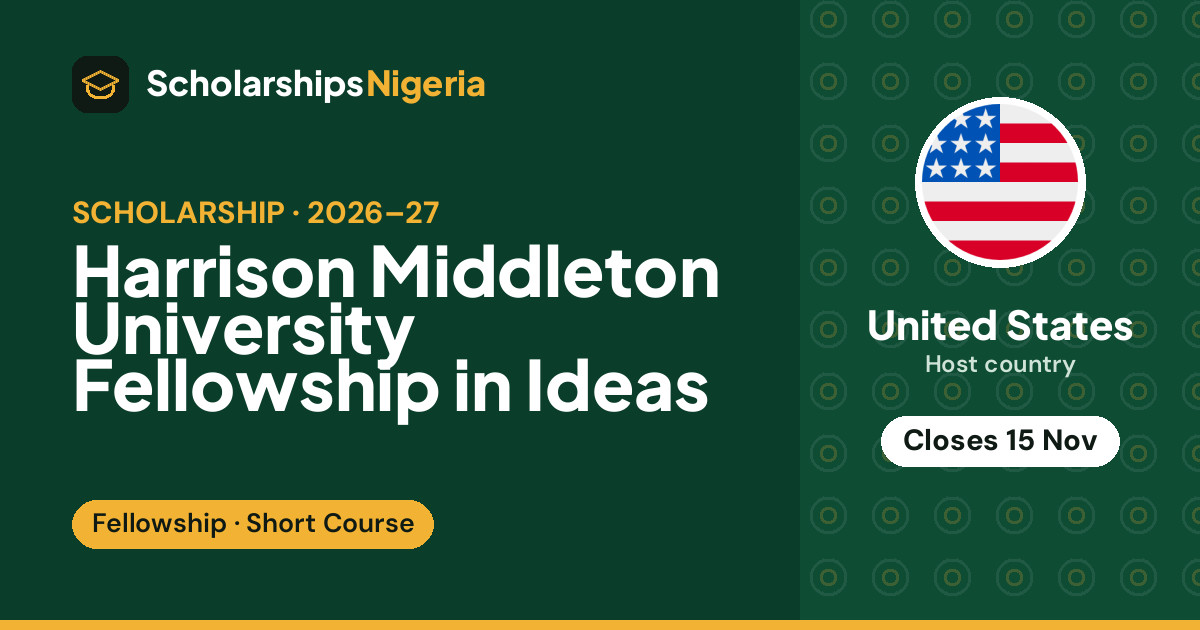
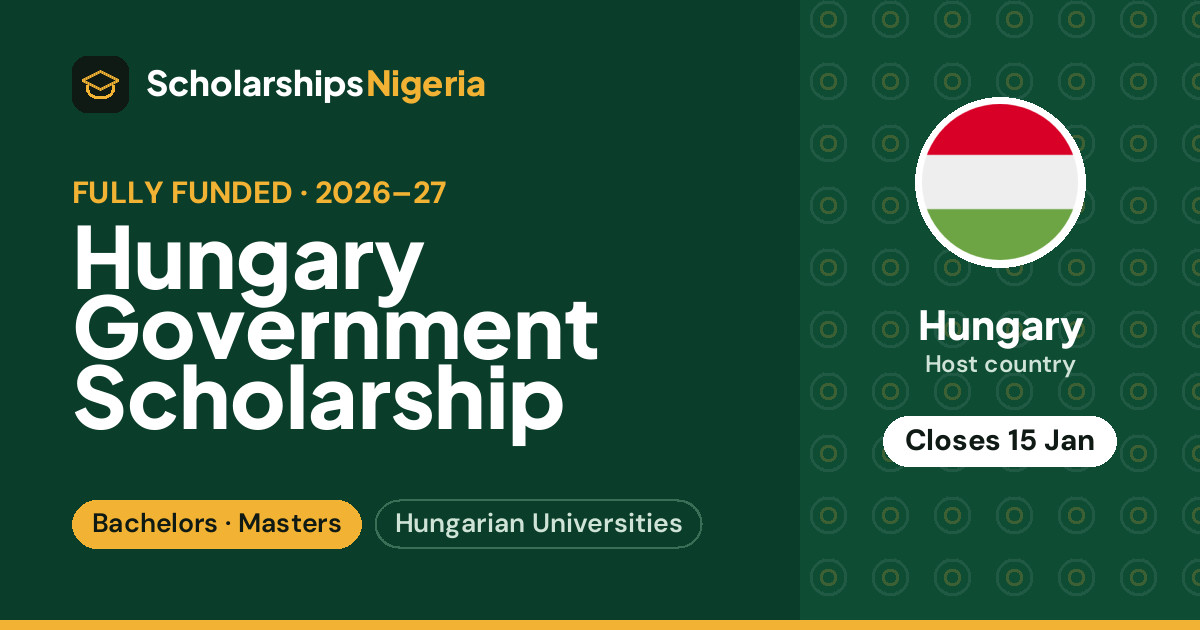
The two closing soonest are worth naming:
Thirty-eight days is enough time to request a reference letter and have it written, but only if you ask now. Nigerian referees are often juggling teaching loads and supervision, and a polite request sent today beats an urgent one sent in three weeks.
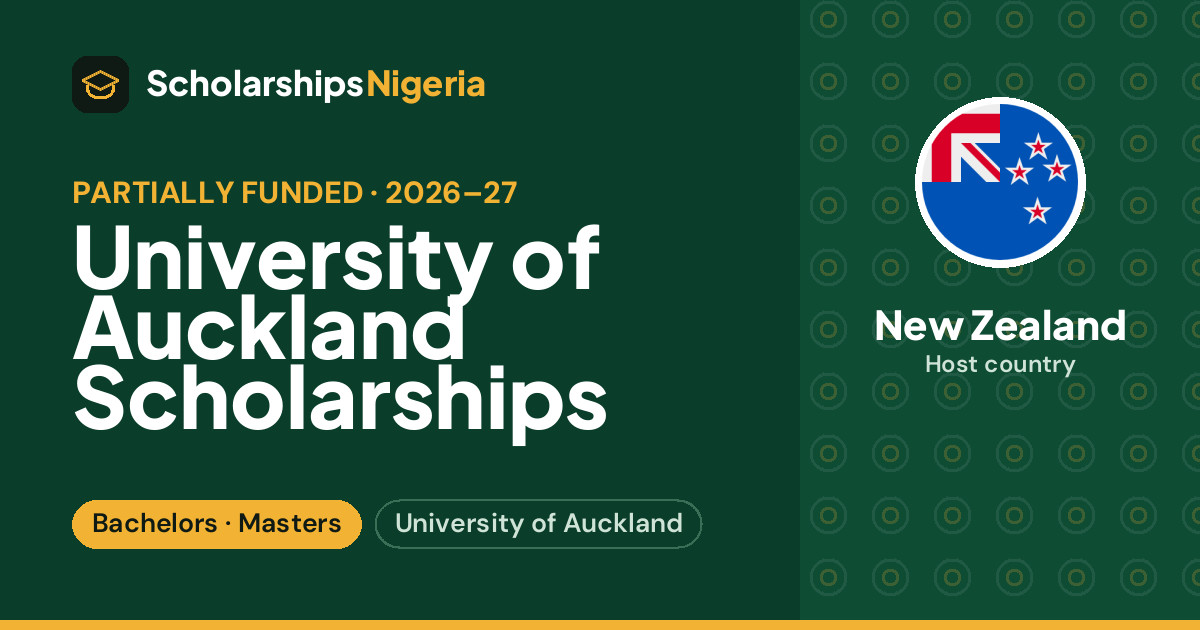
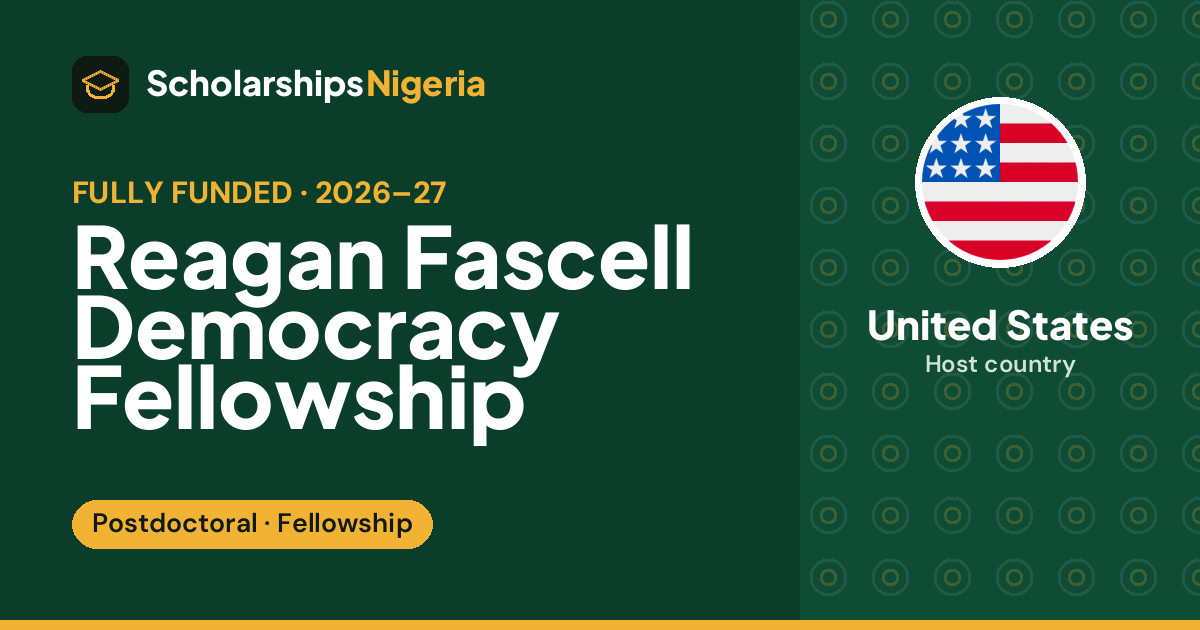
The other three awards on the page are listed with their own deadline wording: Friedrich Ebert Stiftung splits by intake, with a master's deadline of 30 April 2026 for the summer semester; the Reagan Fascell Democracy Fellowship points you to its details page; and the University of Auckland lists a Semester One window running from 11 September to 23 October. Read each one directly rather than assuming the pattern holds.
Fields and fit
One award on this page is tagged to Arts & Humanities. The rest are not tagged to a single field in the brief, which means the field question is answered on each award's own page, not here.
If your background is in the humanities, the Harrison Middleton fellowship is the obvious starting point and it is also the one closing soonest. If your work touches democracy, governance or civic research, the Reagan Fascell Democracy Fellowship is the one to open next.
What to do now
Start with the two dated awards, because they are the ones with a clock running. Open the Harrison Middleton page first if you are in the humanities or in an ideas-driven field. Open the Hungary Government Scholarship next if you want a fully funded route that covers undergraduate, master's, PhD and non-degree study, and if you can work to a January deadline.
Then work through the remaining three. For each one, confirm three things on its own page: whether the funding label matches what you need, whether the documents it asks for are documents you can obtain in time, and whether the deadline is a fixed date or a recurring window. Two awards here recur, which means a missed cycle is not necessarily a closed door.
Finally, price the paperwork before you commit. Transcripts, courier fees and any English-test costs come out of your pocket, and they add up across five applications. Decide which two or three are genuinely worth the spend, and put your effort there rather than spreading it thin across all five.