What this page lists
This page gathers 29 fellowship awards open to Nigerian students and graduates. A fellowship is not the same as a scholarship for a taught degree. It is usually a funded position tied to a research project, a professional placement, a residency or a leadership programme, and it often sits outside the standard Master's or PhD admission route. Some of the awards here are attached to a university department; others are run by foundations or institutes that take fellows in for a fixed period and pay them a stipend.
Of the 29, 23 are labelled fully funded by the provider and one is labelled partially funded. Five do not state their funding position either way, so treat those as unknown until you read the award page itself. Do not assume a fellowship is fully funded simply because it appears on a list.
Which countries and study levels appear
The United States dominates the collection with 13 awards. Canada follows with 4, then Germany, Italy, Japan and Switzerland with 2 each. Australia, China, Spain and the United Kingdom each appear once. That spread matters when you are weighing visa timelines, flight costs and how far you are willing to be from home for a year or more.
By level, the picture is broader than the word "fellowship" suggests. All 29 are tagged as fellowships, but 11 also carry a Master's tag, 11 carry a PhD tag, 11 carry a postdoctoral tag, 4 carry a Bachelor's tag, 4 carry a high school tag and 2 carry a short course tag. Some awards accept applicants at more than one stage, which is why the numbers overlap.
By field, Arts & Humanities is the largest group with 4 awards. Business & Management, Engineering, Natural Sciences and Social Sciences each have 2. Computer Science & IT and Energy & Environment each have 1. If your discipline is not listed, that does not automatically disqualify you, but it does mean fewer of these particular awards will fit.
Can a Nigerian applicant apply?
This is the question worth answering before you spend money on transcripts. Of the 29 awards, 16 state that Nigerians may apply. Within that group, 1 names Nigeria or the region explicitly and 15 carry no nationality restriction at all. Those two figures describe the same 16 awards, not separate pools.
That leaves 13 awards where eligibility is not stated on the award page. Silence is not permission. Where the brief does not say, you must open the award and read the eligibility section yourself before you commit to an application fee, a courier or a test booking.
For fellowships aimed at postdoctoral or research level, the entry qualification is normally a completed PhD or a Master's with substantial research behind it. For the Master's-tagged fellowships, a good B.Sc or HND plus a strong statement of purpose is the usual starting point. Where an award names a minimum degree class, that requirement is stated in writing, and you should check whether your Nigerian classification maps onto it before applying.
What the awards pay for
Funding language varies, and it is worth reading carefully rather than trusting the "fully funded" label alone. Among the awards that name their benefits in their own text, 14 mention living costs and 14 mention travel. 6 mention accommodation and 6 mention health insurance. 5 mention tuition and 5 mention research or training costs.
Those counts tell you what providers put in writing. They are not a promise that every cost you face will be met. A fellowship that covers living costs and travel but says nothing about tuition may still leave a tuition bill, and a fellowship that covers tuition may leave you paying rent. Check each award's own wording before you build a budget around it.
On duration, a small number of awards state a period: 2 state three years, 1 states four years, 1 states a fellowship year running from 1 July to 30 June, and 1 states a period of 4 to 12 weeks in 2027. Most of the 29 do not state a duration on the listing, so plan to confirm it from the award page.
What the applications ask for
The single most common requirement is letters of recommendation, named by 14 awards. This is where Nigerian applicants most often lose time. Professors and supervisors move, retire and change email addresses, and a referee who agrees in September may not respond in November. Ask early, ask in writing, and give your referee the deadline and a copy of your proposal.
5 awards ask for an English test score such as IELTS or TOEFL, and 5 ask for a research proposal. If you are applying to several fellowships, one well-written research proposal can be adapted across them, but each award usually wants it framed to its own priorities. 4 awards state a minimum degree class, 2 ask for work experience and 1 asks for a commitment to return home afterwards. That last condition is worth noting: if an award expects you to go back, say so plainly in your statement rather than leaving it ambiguous.
Budget for the paperwork. Transcripts from Nigerian universities, certified copies and courier fees are paid by you, and they take time to arrange. Start the document chase before you start the essay.
Deadlines: what is closing soon
Of the 29 awards, 15 carry a stated deadline and 14 are still open at the time of writing. 14 are undated on the listing and 14 recur, meaning the same award returns on a yearly cycle. The busiest months for deadlines are June, October and November, with 3 each.
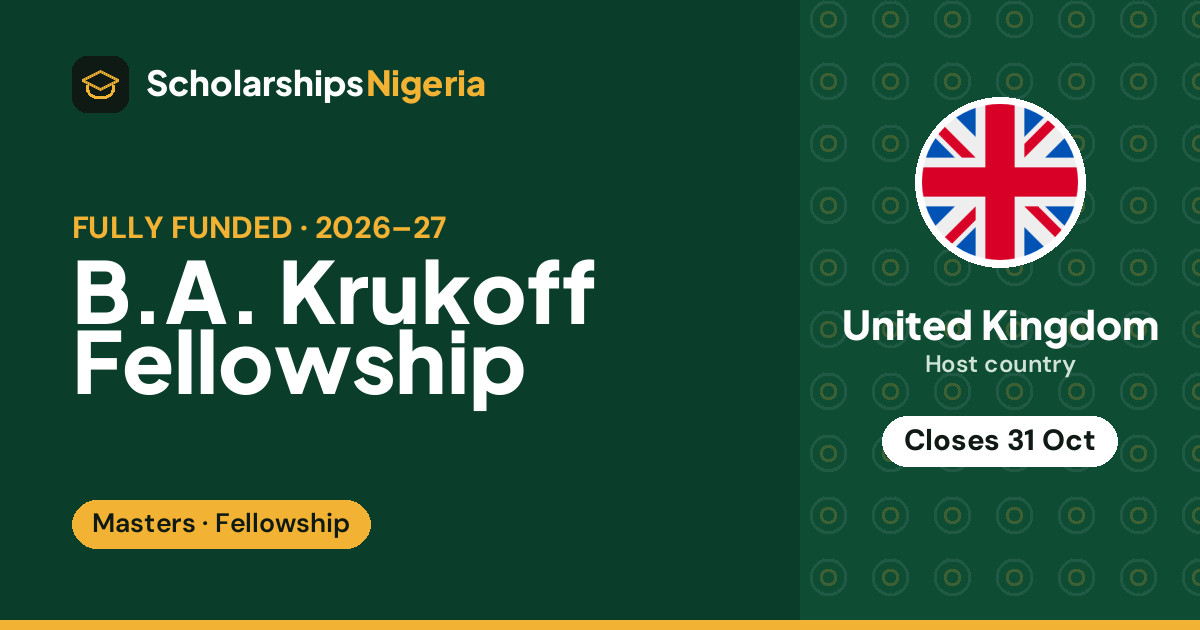
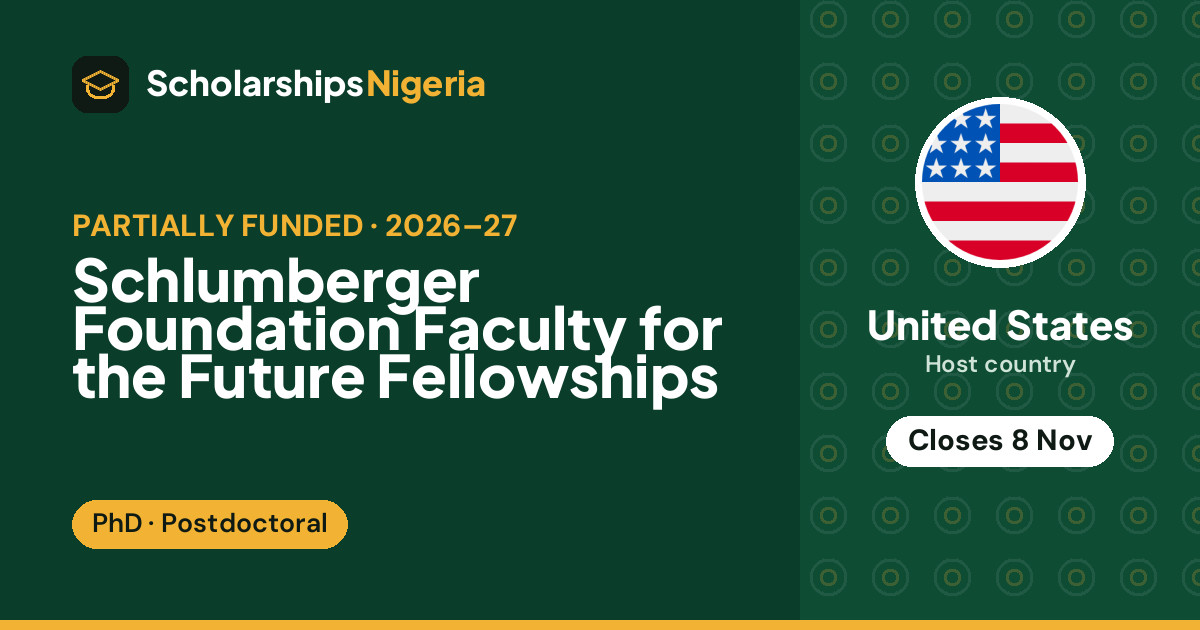
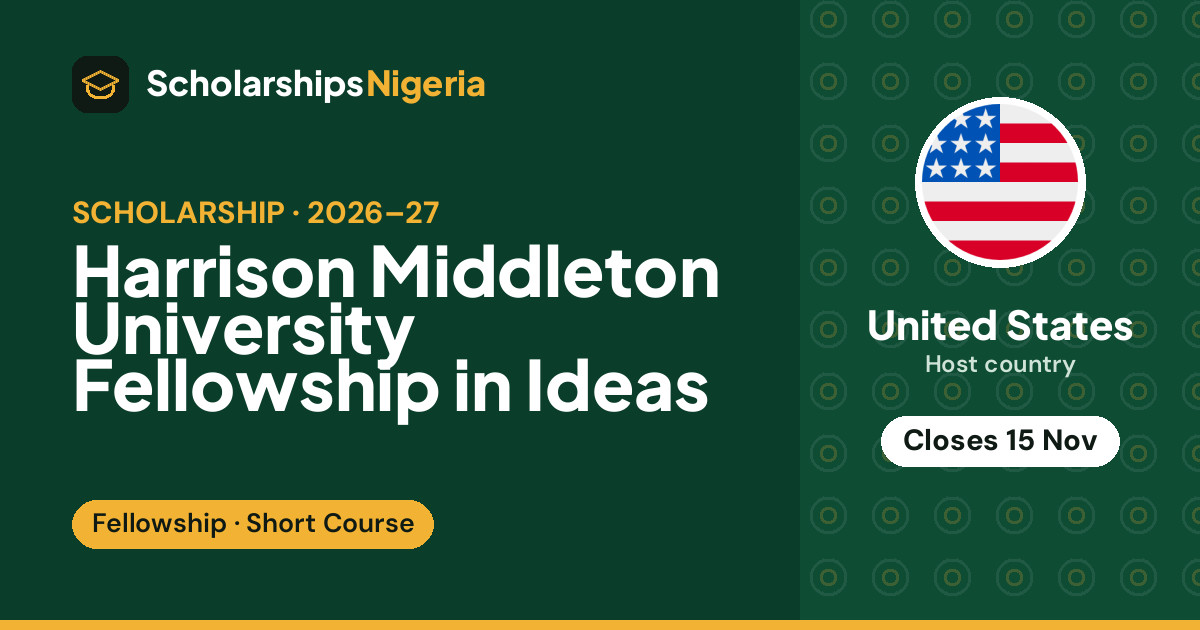
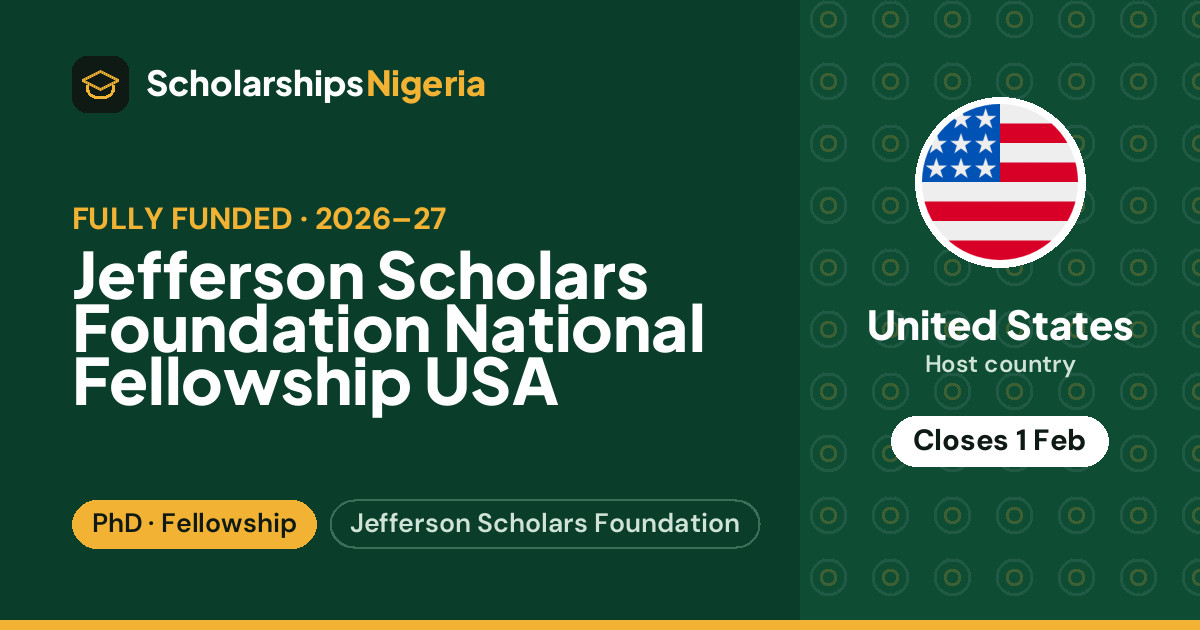
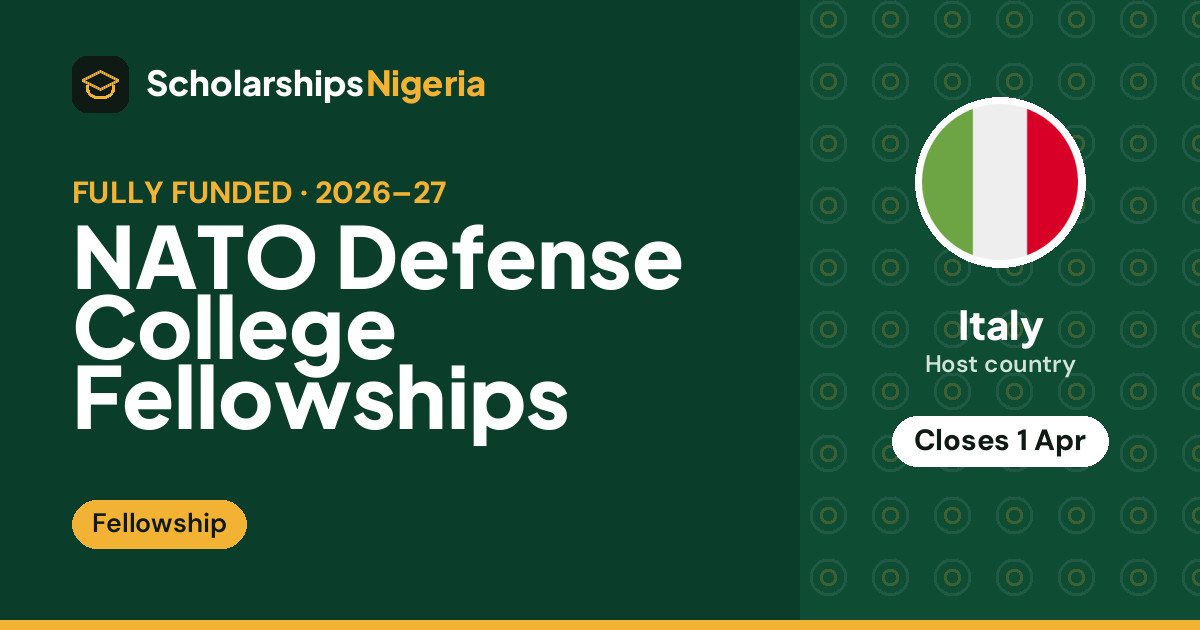
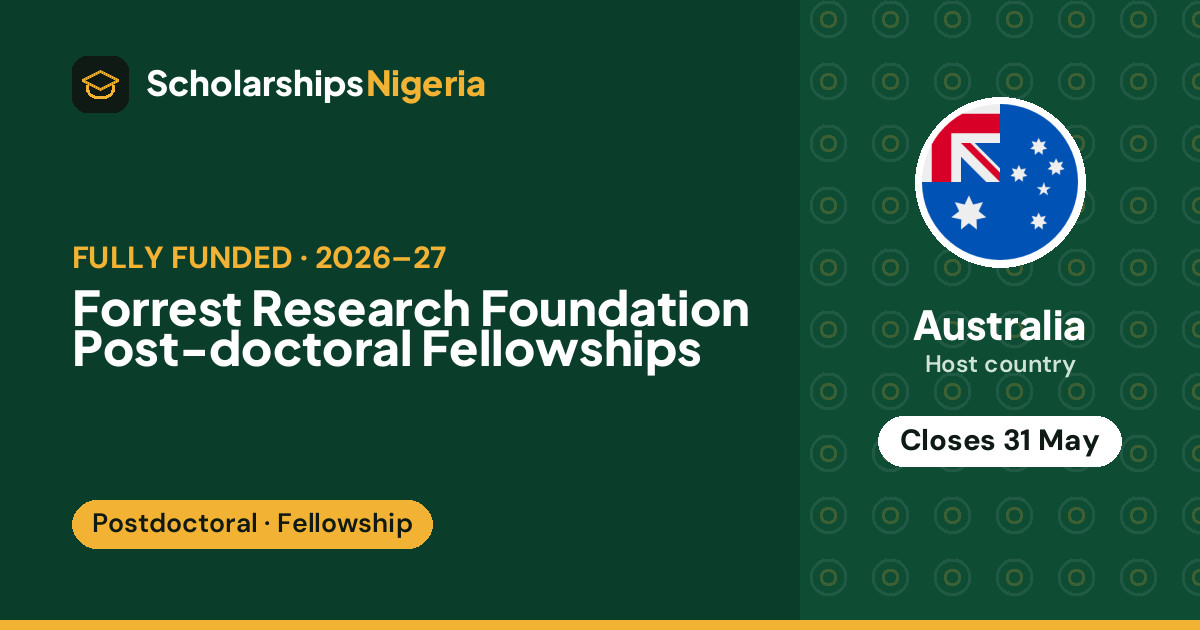
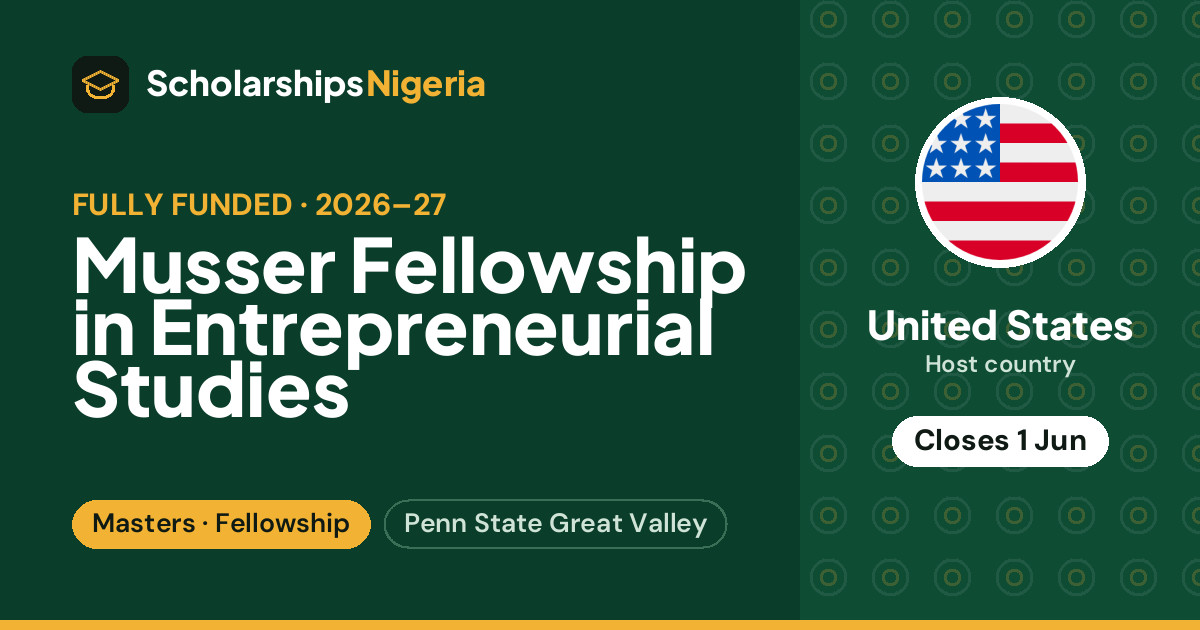
Five awards close soonest:
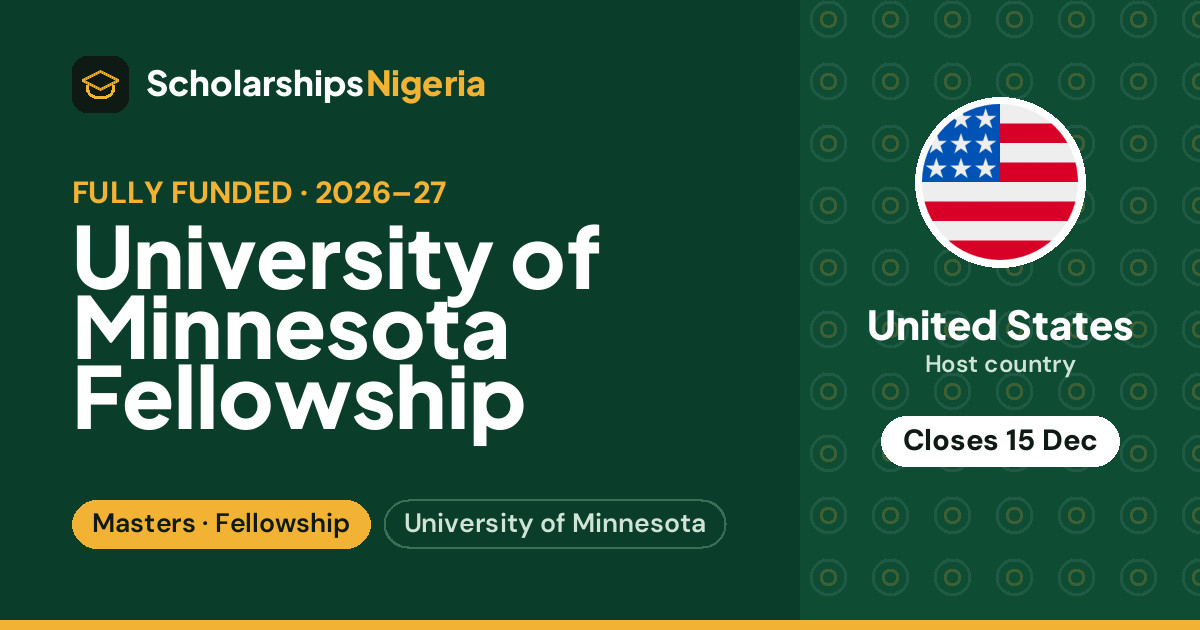
Further out, the University of Minnesota Fellowship 2026-2027 Fully Funded closes 15 December. If none of these fit your stage or field, the 14 recurring awards will come round again, so note the month and prepare earlier next cycle.
Who runs these fellowships
The providers on this page include universities and foundations. Among them are the University of British Columbia, McGill University, the American Association of University Women, the University of Pavia and EDiSU, École Polytechnique Fédérale de Lausanne (EPFL) and the Clark Art Institute, each appearing once in this collection.
That mix is useful. A university-run fellowship usually sits inside a department and comes with supervision and a desk. A foundation-run fellowship may be hosted at a partner institution and is often more focused on the fellow's own project. Read which one you are dealing with before you write your application, because the tone and the expectations differ.
What to do next
Work through the list with your own situation in mind rather than applying everywhere. Start with the 16 awards that state Nigerians may apply, then filter by level and field. If you are finishing a Master's, the postdoctoral and PhD-tagged fellowships are not yet open to you; if you hold a PhD, the undergraduate-tagged ones are not either.
Then check three things on each award page: whether the funding covers what you actually need, whether the deadline is fixed or recurring, and whether the eligibility wording includes you. Where eligibility is not stated, ask the provider directly before you spend money on documents.
Finally, treat the recommendation letters and the research proposal as the long-lead items. They take weeks, not days, and they are the parts of the application you cannot rush at the end.