What this page lists
This page collects 19 scholarships in Arts & Humanities that are open to Nigerian students. Every award here sits in the arts and humanities field and carries an eligibility note that does not shut Nigerian applicants out. The list is not a single programme and not a single country. It is a working set of awards you can filter, compare and apply to one at a time.
Ten of the 19 are labelled Fully Funded. Two are labelled Partially Funded. The remaining seven do not label their funding either way on the award page, so treat those as unknown until you read the individual entry and the provider's own terms.
Where the awards are
The spread is wider than most Nigerian applicants expect. China and the United States each host four of the awards on this list. Australia hosts three. Canada, Germany and the United Kingdom each host two. The Netherlands and Sweden each host one.
That mix matters for how you plan. A Chinese or German award usually means a different document set and a different academic calendar from a United States one. If you are applying to more than one country in the same cycle, build separate folders for each and do not recycle a single personal statement across all of them.
Which levels you can enter
The list is weighted towards postgraduate study, but it is not postgraduate only.
- Masters — 12 awards
- Bachelors — 8 awards
- PhD — 8 awards
- Fellowship — 2 awards
- High School — 1 award
- Short Course — 1 award
Some awards appear under more than one level, which is why these counts add up to more than 19. A single programme can admit both master's and doctoral candidates, so read the level line on each entry rather than assuming the page is for one stage of study.
If you are finishing a B.Sc or HND and looking for a taught master's, the Masters group is where most of your options sit. If you already hold an M.Sc and want to move into research, the PhD group is the one to work through. The two fellowships and the single short course are worth reading even if they are not your main target, because they often carry lighter document demands.
What the awards say they cover
Funding labels tell you the shape of an award, not the detail. The detail sits in what each award states in writing about its own benefits. Across this list:
- Living costs — named by 5 awards
- Tuition — named by 4 awards
- Travel — named by 3 awards
- Research or training costs — named by 3 awards
- Health insurance — named by 2 awards
- Accommodation — named by 1 award
Read those as statements made by the awards themselves, not as a promise about any single application. A "fully funded" label does not automatically mean every line above is included. Check the individual entry for the benefit you actually need. If your main worry is the flight and the first month's rent, look for awards that name travel and living costs. If your worry is bench or archive costs, look for the ones that name research or training costs.
Do Nigerian applicants qualify?
All 19 awards on this page are open to Nigerian students. Of those, 1 names Nigeria or the region in its own eligibility text, and 18 carry no nationality restriction at all. Those two figures together make up the 19; they are not separate pools stacked on top of each other.
What that means in practice is that the barrier is rarely your passport. It is the paperwork. When an award does not restrict nationality, the selection committee is reading your grades, your references, your writing sample or research proposal, and your reasons for choosing that programme. Prepare those as though they are the only thing being judged, because for 18 of these awards, they largely are.
What the applications actually demand
This is the section to read twice. The requirements below are counted from what the awards state in their own text.
- Letters of recommendation — 7 awards
- An English test score (IELTS or TOEFL) — 6 awards
- A research proposal — 5 awards
- An admission offer first — 4 awards
- A minimum degree class — 3 awards
- Work experience — 1 award
Two of these need planning more than the rest. The first is the admission offer: four awards will not consider you until a university has already admitted you, which means the scholarship deadline is effectively later than the admission deadline. Work backwards from the course application date, not the funding date.
The second is the English test. Six awards name IELTS or TOEFL. Book early, because test slots in Nigeria fill up and results take time to reach the provider. If an award does not name an English test in its requirements, do not assume a waiver applies — check the individual entry and the provider's own instructions before you spend money on a test you may not need for that particular award.
For the seven awards asking for recommendation letters, approach your referees early and give them a one-page summary of what you are applying for. For the five asking for a research proposal, the proposal is usually the deciding document in arts and humanities selection, so give it more time than the form itself.
How the deadlines fall
Eleven of the 19 awards carry a stated date, and all eleven are still open at the time of writing. Eight are undated, which usually means a rolling or provider-set deadline that you must confirm on the award page. Eleven are recurring, so if you miss this cycle the same award is likely to return.
December is the busiest month on this list with 3 deadlines. October and May follow with 2 each. If you are planning a single application season, December is the month to protect.
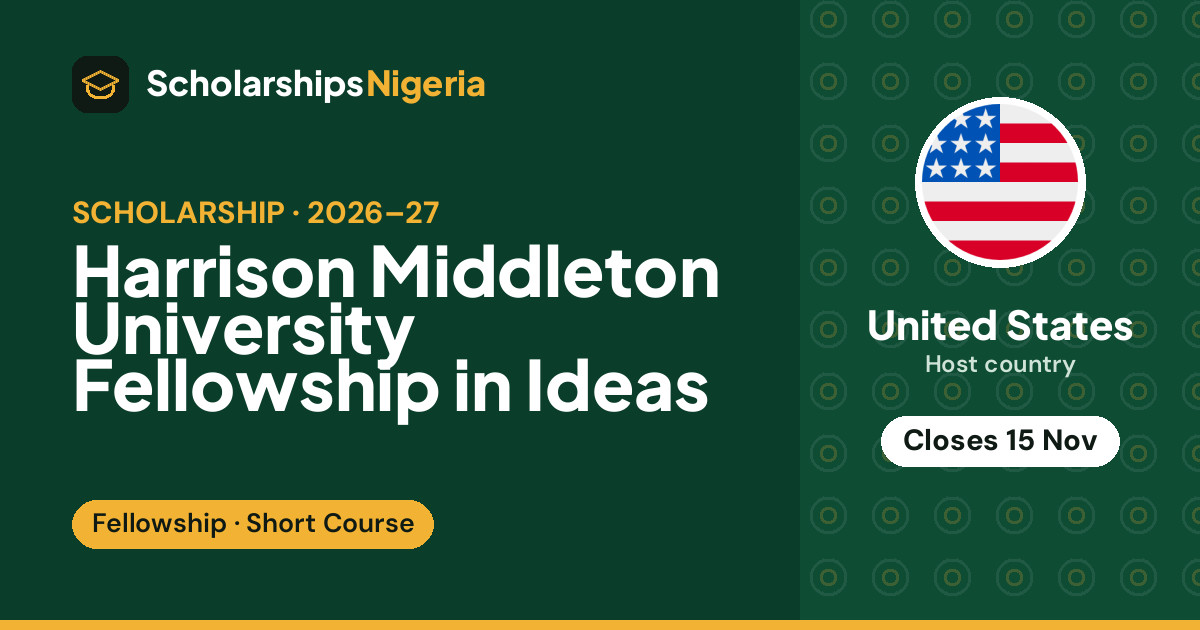
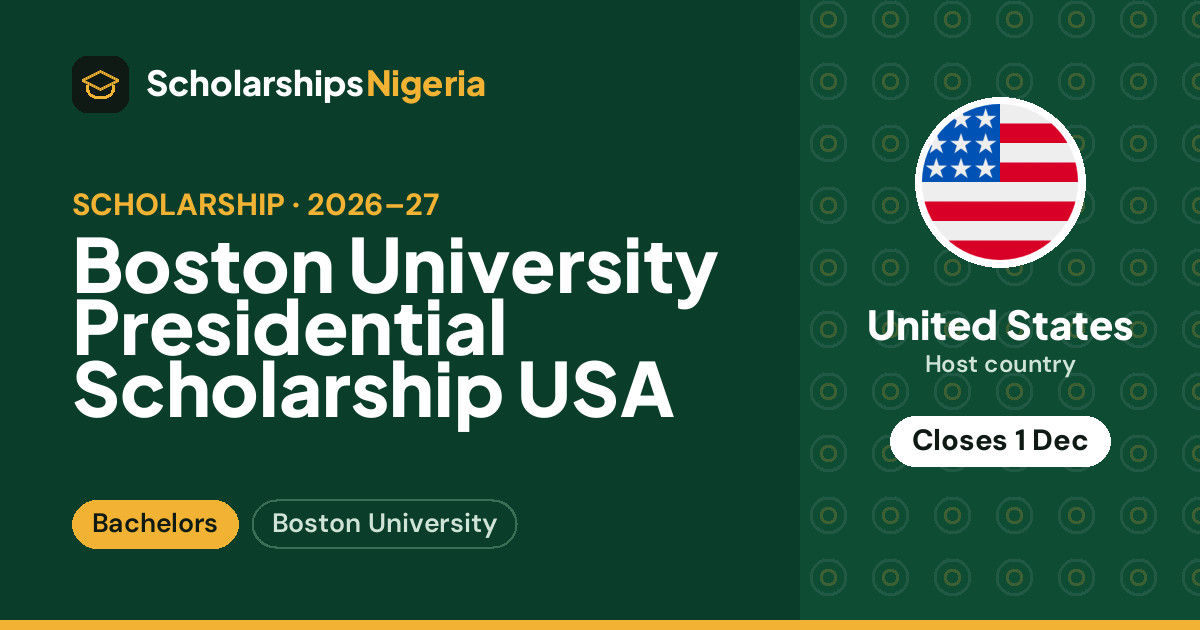
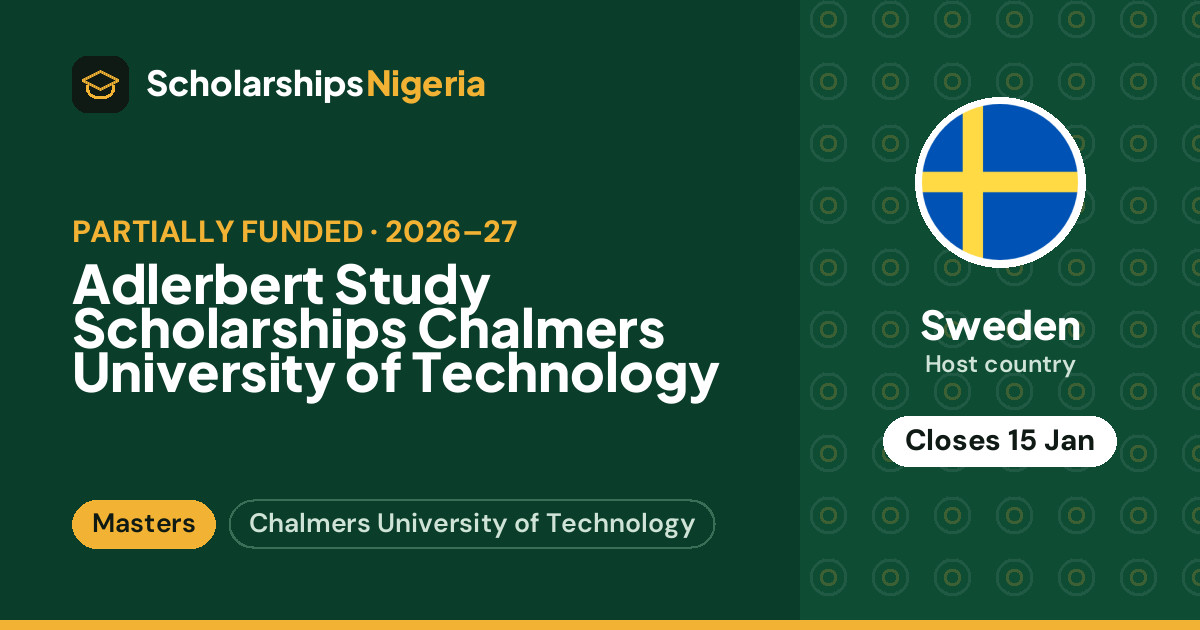
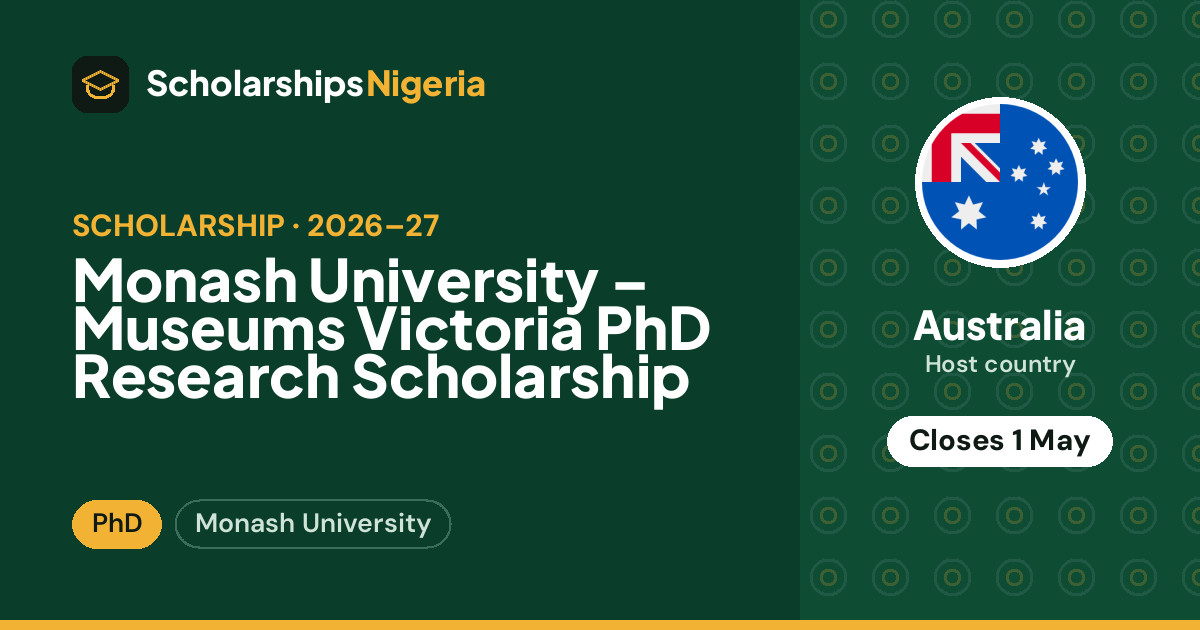
The five closing soonest are:
Three of those five close on the same day, 1 December. If you intend to apply to more than one, start the documents now rather than in the last week of November.
What to do next
Work through the list in this order. First, decide your level — Masters, Bachelors or PhD — and open only those entries. Second, filter by the benefit you cannot do without, whether that is tuition, living costs or travel. Third, check the deadline and whether the award needs an admission offer first; if it does, your real deadline is the university's, not the scholarship's.
Then assemble one clean document pack: transcripts, degree certificate, a current CV, your referees' contact details, and a research proposal if you are applying at PhD level. Most of the friction Nigerian applicants face is not rejection. It is discovering three weeks before a deadline that a transcript has to be couriered, or that a referee has travelled.
Finally, apply to more than one. With 19 awards on this page, 11 still open and 11 recurring, there is no reason to stake everything on a single application. Read each entry in full before you commit, confirm the requirements on the provider's own page, and give yourself a buffer on every date.