What this page lists
This page collects 19 fully funded master's scholarships in the United Kingdom that are open to Nigerian students. Every award on the list is labelled fully funded, and every one of the 19 is at master's level. The set is not limited to one university or one subject: it runs from Oxford and Cambridge to Queen Mary University of London, Durham and Goldsmiths, and from business and management to the arts and humanities.
Nigeria is not a small presence in UK postgraduate study. The UNESCO Institute for Statistics puts the number of Nigerian students in the United Kingdom at 71,756 in 2023, the largest national group from any country. That figure covers all levels of study, but it explains why so many UK awards now write their eligibility rules with West African applicants in mind.
Some awards on this page are also open to doctoral, undergraduate or fellowship applicants, but the master's route is the one that runs through all 19.
What the awards pay for
Fully funded does not mean the same thing at every university. The brief for this page records what each award states in its own text, so treat these as what the award says in writing, not as a guarantee of what you will receive.
- Tuition — named by 16 of the 19 awards.
- Living costs — named by 11.
- Travel — named by 8.
- Accommodation — named by 5.
- Research or training costs — named by 3.
- A settling-in or arrival grant — named by 2.
The gap matters. An award that covers tuition and living costs but not flights leaves you to find airfare, the NHS immigration health surcharge and your first month's rent before any stipend lands. Read the individual award page and check which of the six lines above it actually names.
Who can apply from Nigeria
Of the 19 awards, 7 are open to Nigerian applicants. Within that group, 2 name Nigeria or the region in their eligibility rules, and 5 carry no nationality restriction at all.
For the remaining 12, the award page does not state eligibility on the award itself. That is not a rejection — it usually means the conditions sit on the university's own funding page or in the course entry requirements. You will have to check the department. Do not assume you are excluded, and do not assume you are eligible either.
The qualification you bring is a first degree or an HND — B.Sc, B.A, B.Eng, LLB, MBBS or HND. These are taught and research master's awards. Where an award states a minimum class of degree, "upper second" means Second Class Upper (2:1) on a Nigerian transcript. Whether a particular university accepts an HND for a given master's course is decided by that university, not by the scholarship body, so confirm it with admissions before you build an application around it.
What the applications ask for
The requirements below are counted from what the awards themselves state. They tell you what to prepare, and roughly how common each demand is across this list.
- Letters of recommendation — 6 awards.
- A minimum degree class — 5 awards.
- Work experience — 4 awards.
- An admission offer first — 4 awards.
- An English test score (IELTS or TOEFL) — 2 awards.
- A research proposal — 2 awards.
Two practical points for Nigerian applicants. First, the four awards that want an admission offer first mean the scholarship clock starts after the university clock — you cannot apply for the funding until a course place exists, so the real deadline is the course deadline. Second, only two awards state an English test requirement in their own text, but that is a scholarship figure, not a visa or admissions figure. Many UK universities waive IELTS or TOEFL where your degree was taught in English; ask each one directly rather than paying for a test you may not need.
Recommendation letters and transcripts are the slow items. Nigerian universities can take weeks to produce a transcript, and courier costs sit with you. Start those requests before you start the essay.
Deadlines and how they fall
Seven of the 19 awards carry a stated date, and seven are still open at the time of writing. Twelve are undated, and seven recur annually — meaning the date you see may be last cycle's, with the next round expected in the same month.
The busiest months across this list are May and January, with two awards each, followed by June with one.
The awards closing soonest are:
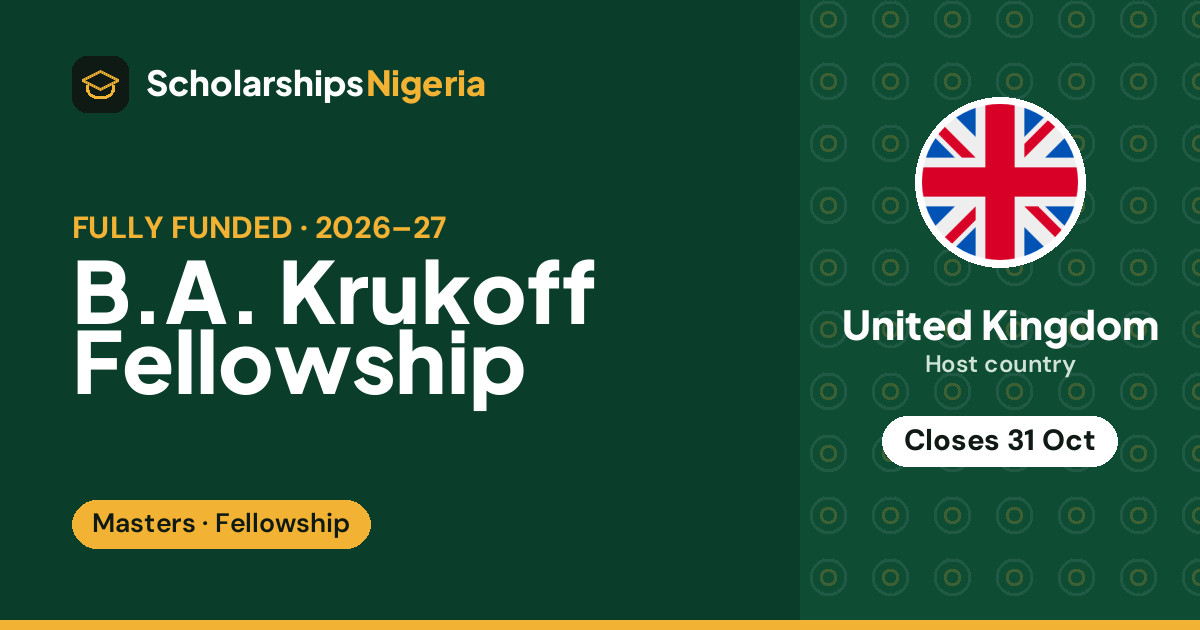
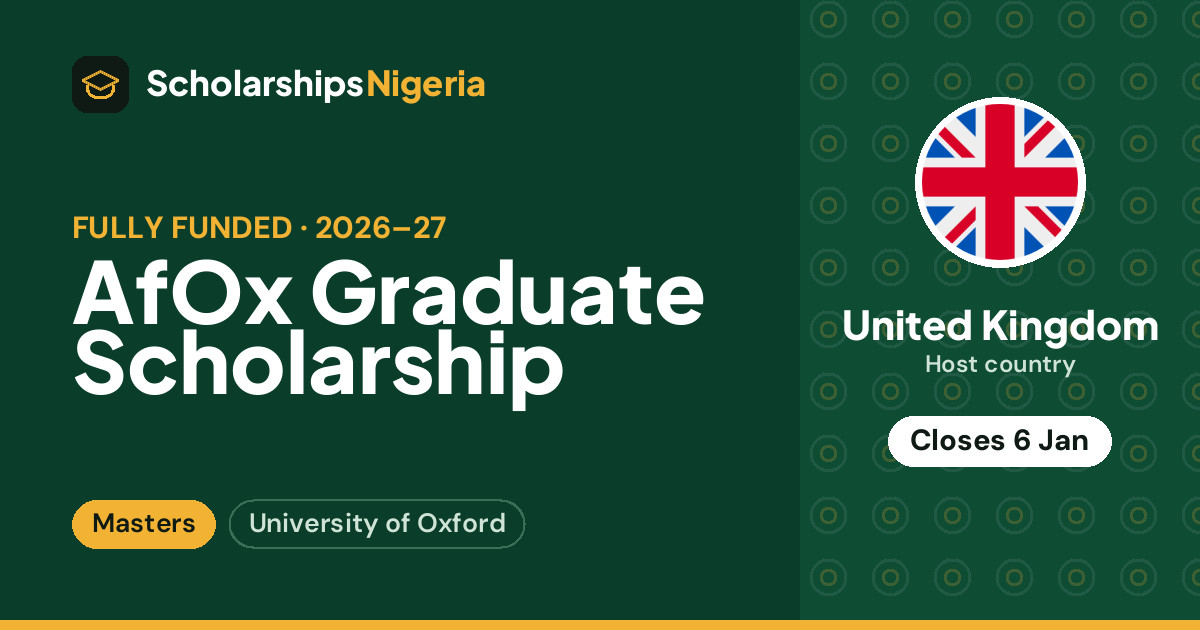
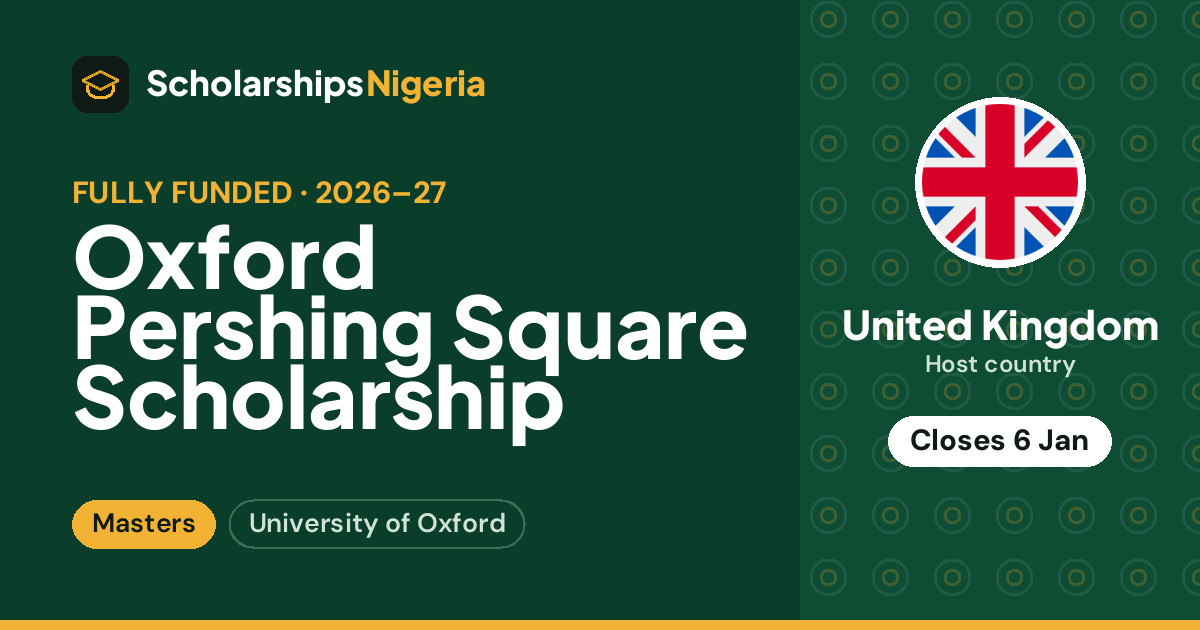
Note the shape of that calendar. Two of the five close on the same day in January, and both are at Oxford, so an applicant targeting Oxford has one date to work to, not two. The Krukoff award closes first, in October, which sits well before most Nigerian transcript offices are moving quickly after the long vacation. If that one is on your list, treat the transcript request as urgent.
Where the awards sit
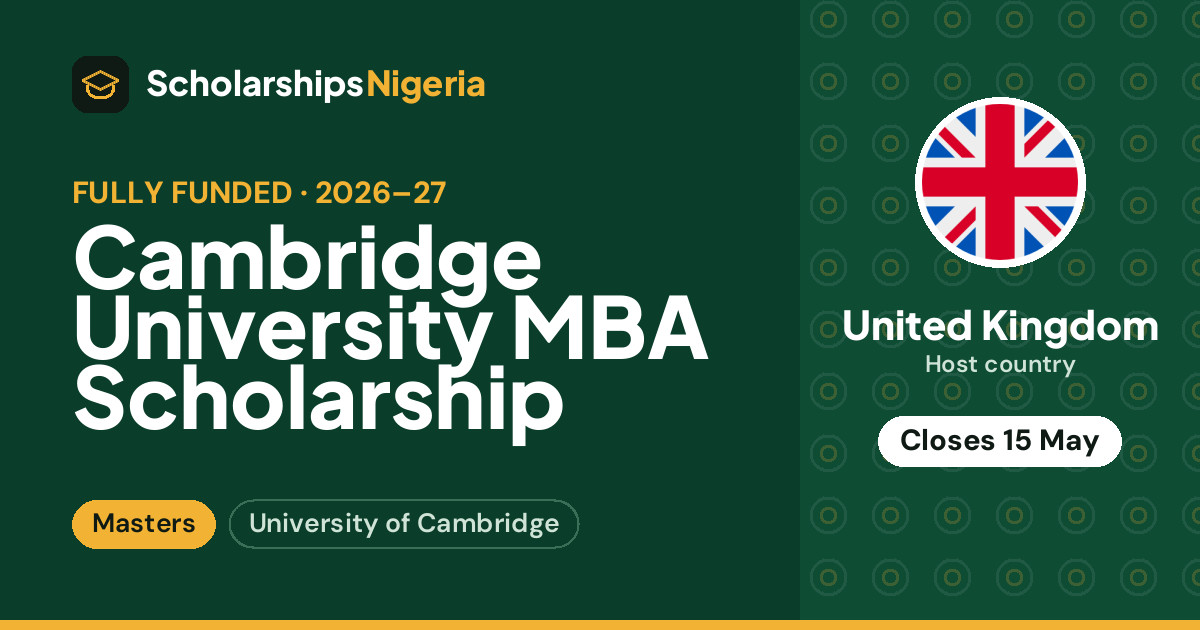
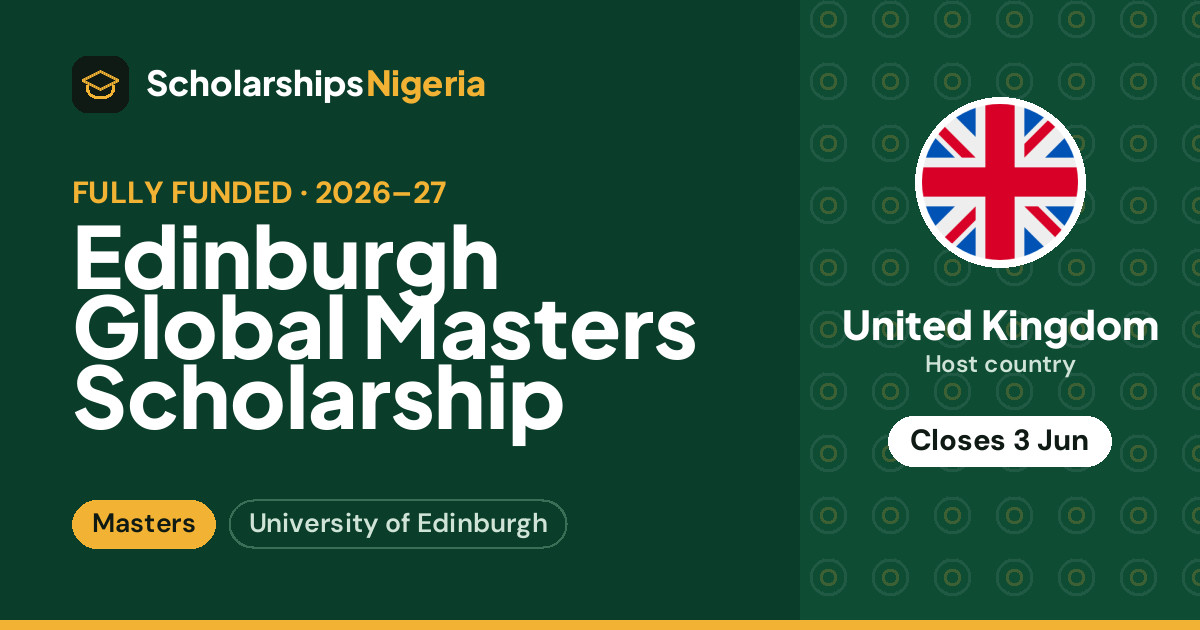
Oxford accounts for 5 of the 19 awards on this page, Cambridge for 2, and Edinburgh for 1. The rest are spread across UK universities, with Queen Mary University of London, Durham and Goldsmiths appearing among the named examples.
By subject, business and management is the clearest cluster with 3 awards, and arts and humanities follows with 1. For the remaining awards, the subject is set by the course rather than by the scholarship, so the field list is shorter than the award list.
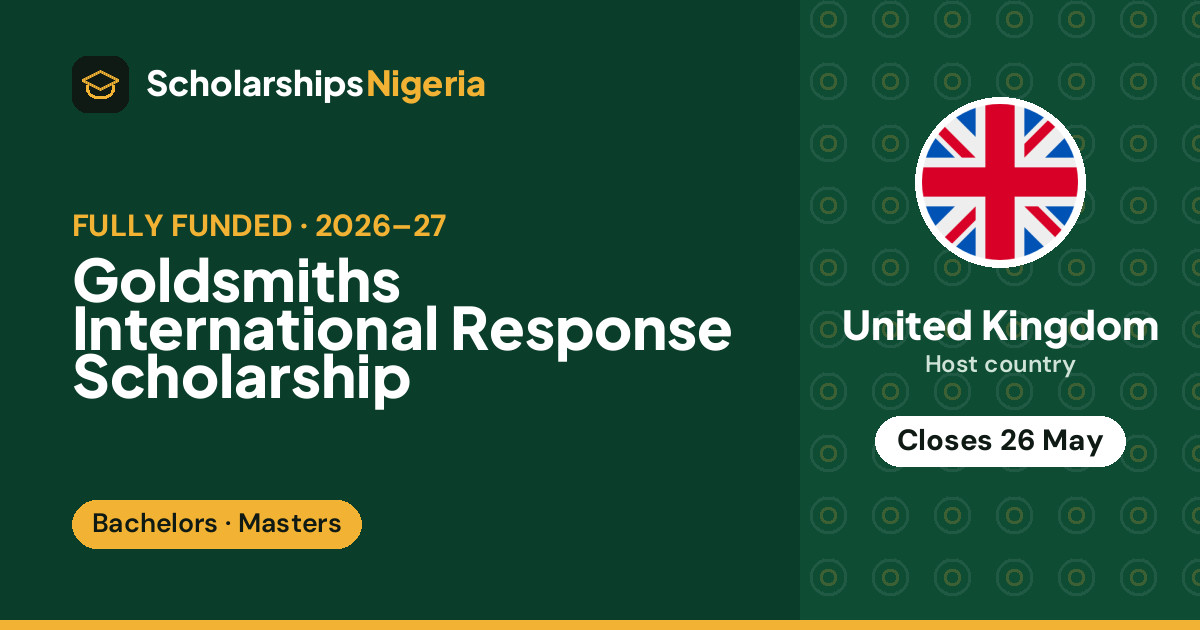
Two awards on the page state how many places they offer. The Goldsmiths International Response Scholarship 2026-2027 states 4 awards — 2 undergraduate and 2 master's — so the master's route there is 2 places. Where an award does not state a number, this page does not guess one.
On duration, 3 awards state one year, 2 state two years, one states one year for a postgraduate course, and one says the length depends on the selected programme but is not more than a year. If you are planning around a two-year master's, check the award's own duration line before you commit.
What to do next
Work in this order. First, decide whether you are applying to a named award or to a university that funds its own students — the two routes have different deadlines and different paperwork. Second, open the award page for anything closing within the next three months and read the eligibility section yourself, especially for the 12 awards where eligibility is not stated on the award. Third, request transcripts and approach your referees, because those are the two items you cannot rush at the end.
If you hold a Second Class Upper or better, you are inside the stated degree requirement for the 5 awards that name one. If you hold an HND, confirm acceptance with the university before you spend money on application fees or couriers.
Finally, be realistic about volume. Nineteen awards, 7 open to Nigerian applicants, and 2 that name Nigeria or the region. The list is long enough to find a fit and short enough that a scattergun approach wastes your money. Pick the awards where your degree class, subject and timeline actually match, and put your effort there.