What this page lists
This page collects 12 fully funded scholarships in China that are open to Nigerian students. Every award here is labelled fully funded by the body offering it, so the funding question is settled before you start reading individual entries. What differs is the level, the field, the documents demanded and the closing date.
The awards are concentrated at postgraduate level. 11 of the 12 are open to master's applicants and 10 to doctoral applicants. Undergraduates are not shut out: 8 of the 12 accept bachelor's applicants. One award on the list is a fellowship rather than a degree programme.
Who can apply
Of the 12 awards, 9 are open to Nigerian applicants. That figure breaks down in a way worth understanding before you spend money on a courier. None of those nine names Nigeria or the African region in its eligibility text. All nine simply carry no nationality restriction. In practice this means the award is open to international applicants generally, and a Nigerian passport is not a barrier.
The remaining 3 awards do not state their eligibility on the award page at all. That is not the same as being closed to you. It means the information is not published where this list can capture it, and you would need to confirm directly with the provider before applying.
One caution that applies across the whole page: where an award does not name a nationality restriction, you are still competing against every other international applicant. Read the full eligibility text on each award page rather than relying on the summary.
What the awards pay for
Fully funded means different things at different universities. These are the benefits the awards themselves name in writing:
- Tuition: named by 8 awards
- Living costs or stipend: 7
- Accommodation: 6
- Health insurance: 6
- Travel: 3
- Research or training costs: 2
Tuition and a stipend are the common core. Travel is the least commonly named benefit, so if you are budgeting for a one-way flight from Lagos or Abuja, check the individual award before assuming it is covered. Accommodation and insurance appear on more than half the list, which materially changes what you need to save.
Where an award does not list a benefit, treat it as not covered until the provider tells you otherwise.
Subjects and levels
The list is spread across ten subject areas, with no single dominant field. Arts and humanities, business and management, and economics and finance each appear 4 times. Agriculture, education, engineering, law, and medicine and health sciences each appear 3 times. Public policy and development, and social sciences, appear once each.
For a Nigerian applicant, the engineering, agriculture and medicine entries are worth a close look, since these map onto strong undergraduate and HND backgrounds. Law and the business fields suit applicants with an LL.B or a B.Sc in management or accounting.
What the applications demand
This is where the real work sits. The requirements the awards state:
- Letters of recommendation: 8 awards
- An English test score (IELTS or TOEFL): 7
- A research proposal: 3
- An admission offer first: 3
- Work experience: 2
Recommendation letters are the most common requirement, and they are the one Nigerian applicants most often underestimate. Two or three referees, usually academic, need to be approached weeks before the deadline, not days. If your former lecturer is now at a different institution, start that conversation early.
The English test is required by 7 of the 12. Some Chinese universities waive this where your previous degree was taught in English, but that waiver is granted by the institution, not by this page. Ask before you pay for a test slot.
Three awards expect a research proposal, which normally means a doctorate or research master's route. Three require you to hold an admission offer before you apply for the funding, so the sequence is admission first, scholarship second. Two name work experience.
Deadlines and how they fall
Eight of the 12 awards carry a stated date and are still open. Eight are recurring, meaning they run again in a later cycle. Four are undated.
The busiest months are May (4 awards), April (2) and December (1). The cluster in April and May means you should be assembling documents in the first quarter of the year, not waiting for the deadline to appear.
The awards closing soonest:
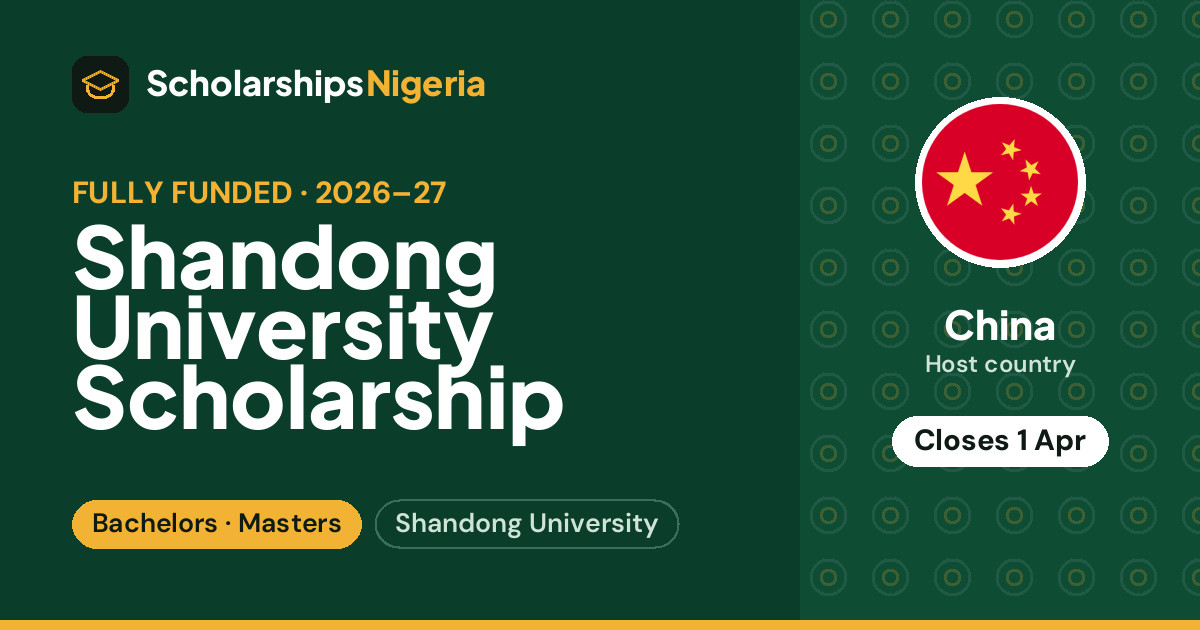
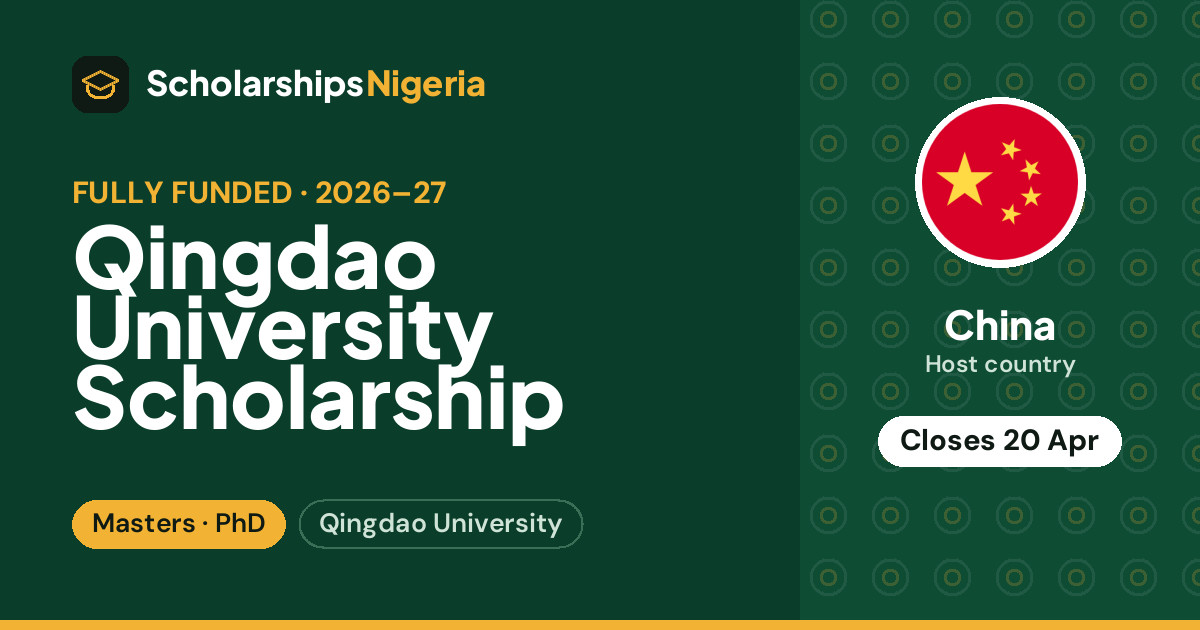
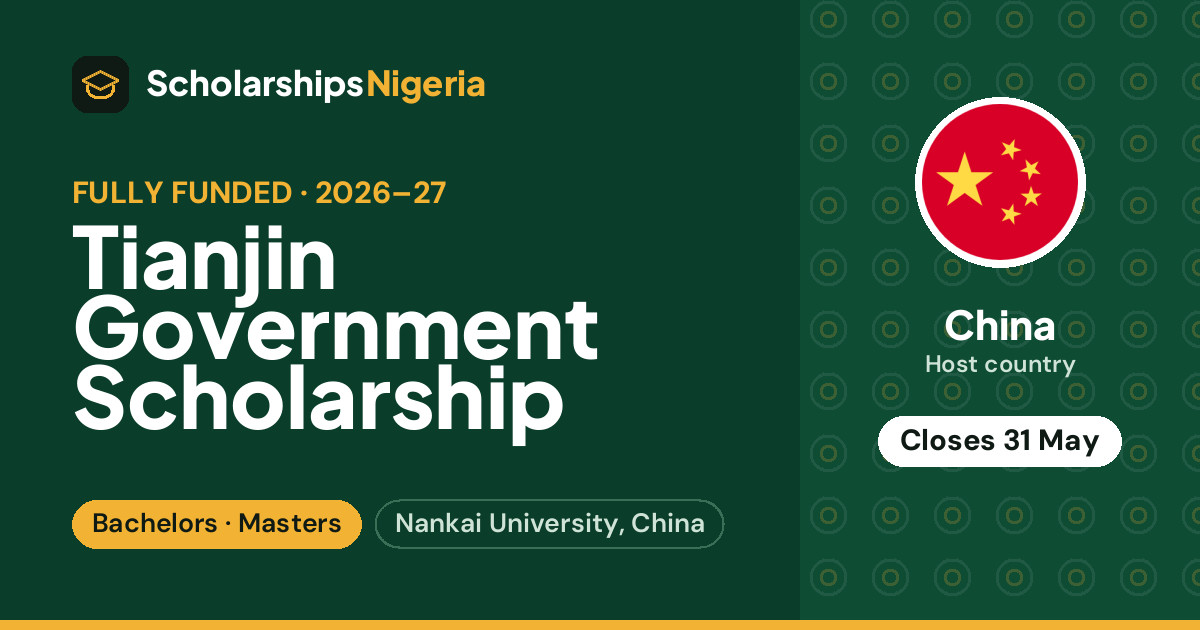
The Yenching Academy award at Peking University is the nearest deadline and is a master's programme. Shandong, Qingdao and Yangzhou take applicants at more than one level. Central South University also appears on the list and closes 31 May.
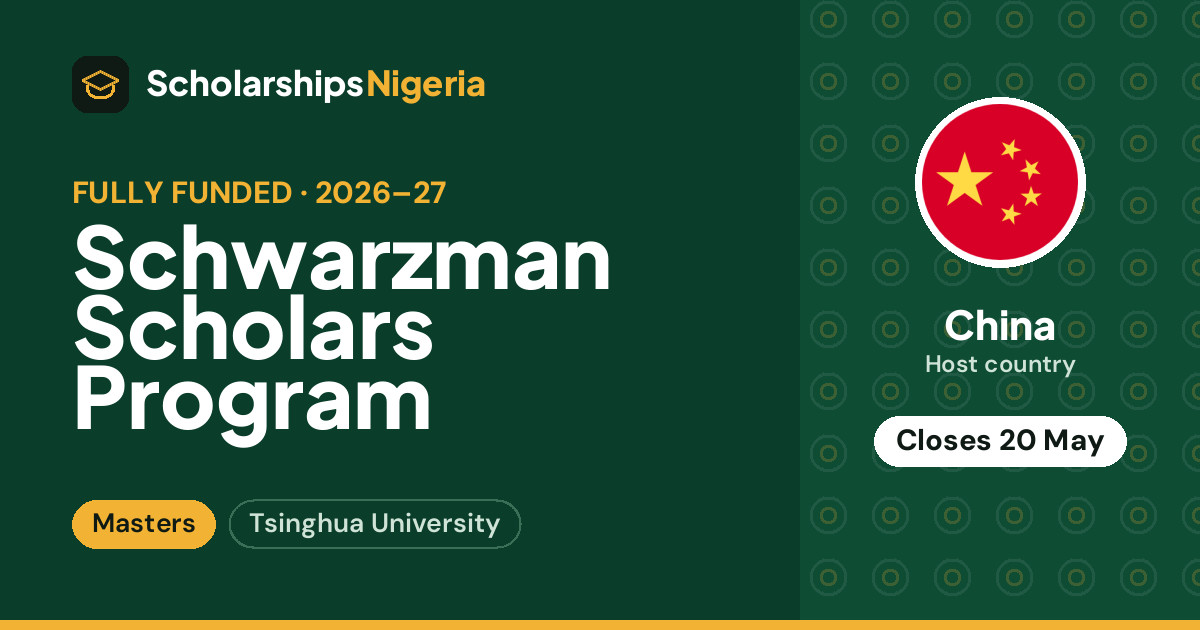
Two awards publish their number of places. The Qingdao University award states 20 places at PhD and 10 at master's. The Schwarzman Scholars Program states up to 140. Where no number is given, the list does not have one.
Providers on this list
The awards come from named institutions and grouped listings:
- Peking University
- Shanghai universities (grouped listing)
- Beijing universities (grouped listing)
- Shandong University
- Central South University (CSU)
- Yangzhou University
The grouped Shanghai and Beijing listings cover more than one institution and are worth opening if you have a city preference.
What to do next
Start with the Yenching Academy award if you are applying for a master's, because 1 December is the closest date on the page. Then work through the April and May cluster, since four awards close in May alone.
Before you spend money, do three things. Confirm the eligibility text on the award page, because three awards on this list do not publish it. Confirm whether the English test requirement applies to you, because seven awards name it. And confirm which benefits are stated, because travel is named by only three awards while tuition is named by eight.
Order your transcripts early. Nigerian universities take time to produce them, and courier costs are yours. Approach your referees before you need them, since eight awards ask for recommendation letters. If an award requires an admission offer first, reverse your order of work and secure admission before you write the funding application.
Read each award page in full. The summary here tells you what is on the list and what the awards say they cover. The decision on your application rests on the detail inside each entry.