What this page lists
This page collects 7 PhD scholarships in China that are open to Nigerian students. Every one of the seven is listed as fully funded. They are doctoral awards, and the same seven also appear against master's study, so a good number of them will take you at either level.
Six of the seven also carry bachelor's degree places, which tells you something useful about how Chinese universities structure their funding: a single scholarship scheme often runs across all three levels, with the same portal, the same document checklist and the same calendar. If you are applying for a PhD, you are applying into a scheme that is also processing undergraduate and master's candidates at the same time.
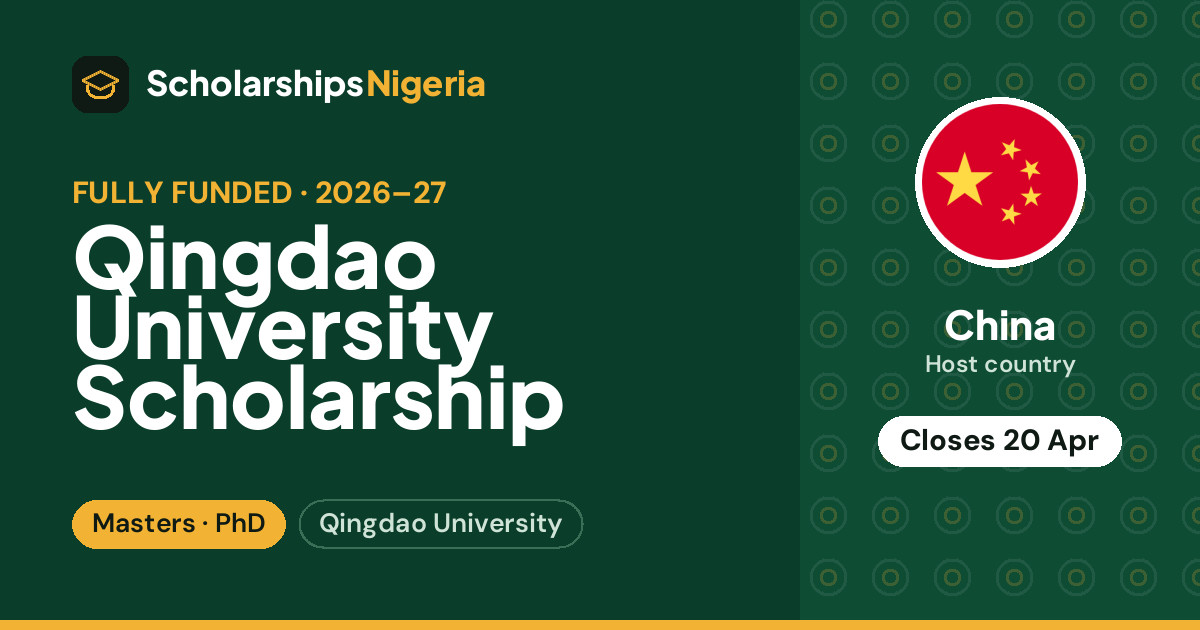
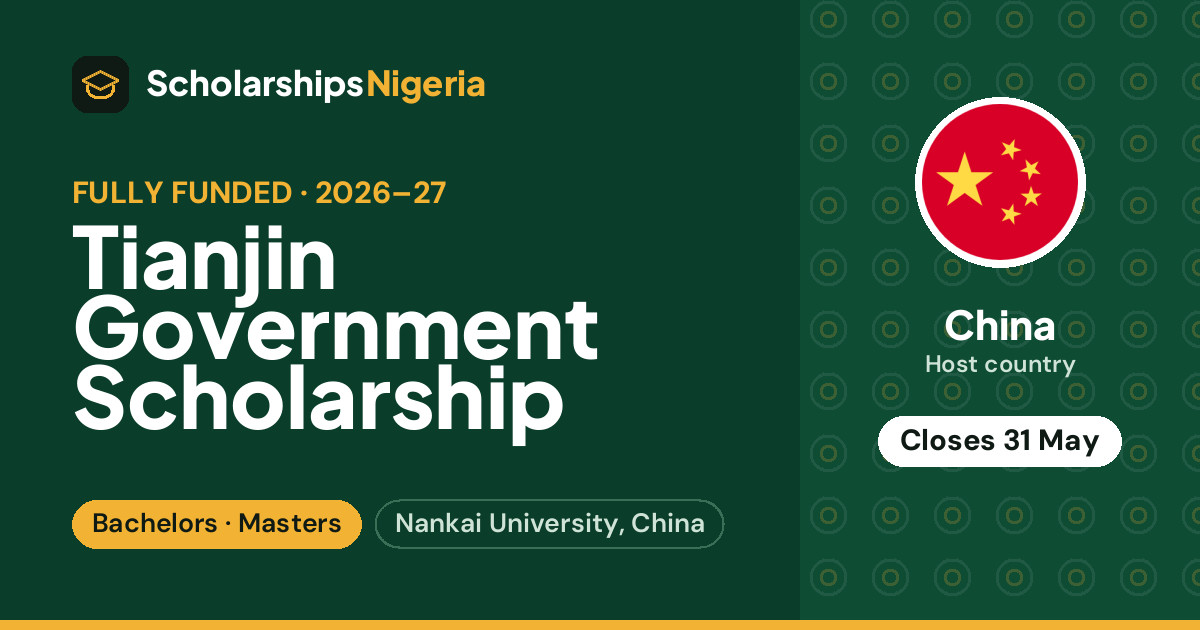
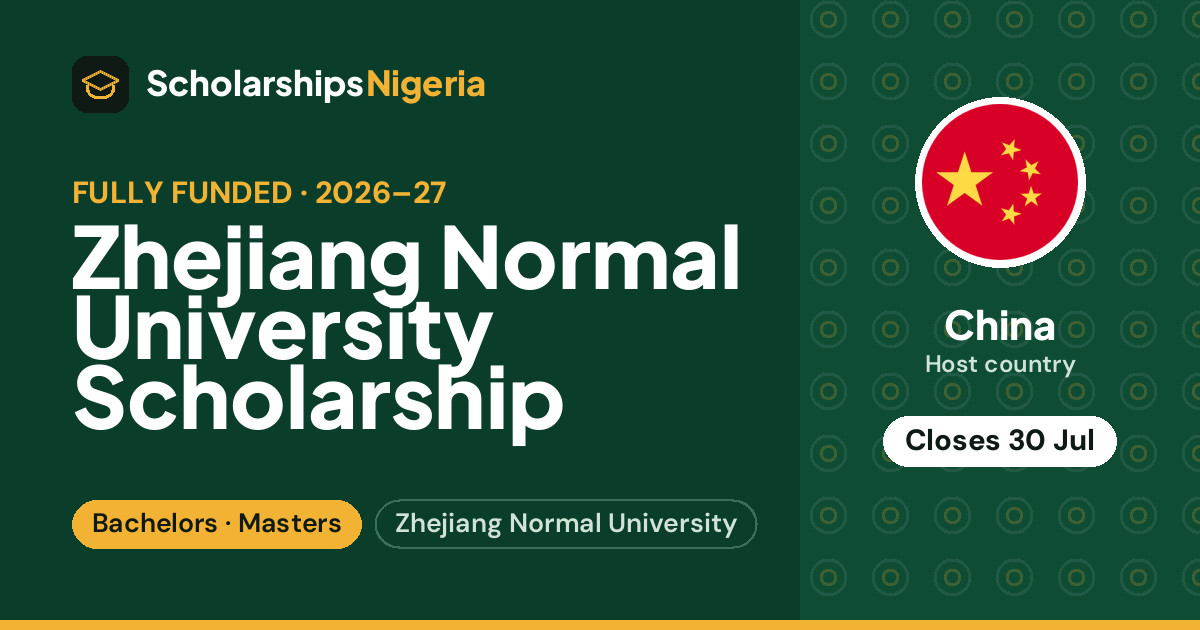
The providers on the list are a mix of city and provincial government schemes and individual universities. Shanghai Universities, Beijing Universities, Yangzhou University, Nankai University, Qingdao University and Zhejiang Normal University all appear.
Who can apply
All 7 of the 7 awards on this page are open to Nigerian applicants. None of them names Nigeria or the African region in its eligibility text, and none of them carries a nationality restriction. In other words, the route is open because the award is open to international students generally, not because a special Nigerian quota exists.
That distinction matters when you write your application. You are not competing for a reserved slot. You are one international candidate among many, and the strength of your research plan, your academic record and your fit with a supervisor is what carries the file.
The qualification that leads into this level is a master's degree. An M.Sc, M.A, MBA or M.Phil all fit. If your master's is from a Nigerian university, expect to submit your transcript and your certificate, and budget for the cost of obtaining and couriering both.
What the awards pay for
All seven are fully funded. Beyond that headline, the individual award pages state specific benefits, and the counts below show how many of the seven name each item in their own text.
- Tuition — named by 4 of the 7
- Accommodation — named by 4 of the 7
- Living costs — named by 3 of the 7
- Health insurance — named by 3 of the 7
- Research or training costs — named by 1 of the 7
Read those figures as what the awards say in writing, not as a guarantee of what lands in your account. A scheme that names accommodation may provide a room on campus rather than a housing allowance. A scheme that names living costs may pay a monthly stipend at a rate set by the university. Where an award does not spell out a benefit, treat it as unconfirmed and ask the international office directly before you commit.
Only one award on this page mentions research or training costs. If your PhD depends on laboratory work, fieldwork, reagents or conference travel, that is the line to check first, and the question to put to a prospective supervisor early.
What the applications ask for
The requirements stated across the seven awards break down like this:
- Letters of recommendation — required by 5 of the 7
- An English test score (IELTS or TOEFL) — required by 3 of the 7
- A research proposal — required by 2 of the 7
- Work experience — required by 1 of the 7
- An admission offer first — required by 1 of the 7
Five awards asking for recommendation letters is the practical bottleneck. Approach your referees early, give them your CV, your proposal summary and the deadline in writing, and follow up. A referee who is asked in the same week the portal closes will not serve you well.
Three awards ask for IELTS or TOEFL. If your previous degree was taught in English, that is worth raising with the admissions office, because some Chinese universities accept a medium-of-instruction letter in place of a test score. Do not assume it, and do not skip the test on the strength of an assumption. Confirm in writing.
Two awards ask for a research proposal, which is a small number on a doctoral list. Where a proposal is not requested at application stage, a supervisor may still ask for one before agreeing to take you on. Prepare a short, specific proposal regardless: your topic, the gap you are addressing, your method, and why this university.
One award requires an admission offer before you can apply for the funding. That reverses the usual order. If you are targeting that one, the university application comes first and the scholarship application second, and the two timelines have to be planned together.
How the deadlines fall
Four of the seven awards carry a stated date. All four of those are still open. Three are undated, and four run on a recurring cycle rather than a single fixed closing date.
The busiest months across the list are May (2 deadlines), then April (1) and July (1).
The four closing soonest are:
Two more on the list run on cycles rather than a single date. The Shanghai Government Scholarship (SGS) Fully Funded 2026 - 2027 takes applications between January and June of each year. The Beijing Government Scholarship 2026-2027 (Fully Funded) points you to its details for the closing date.
Doctoral study in China commonly runs for three years, and the award pages on this list state durations of that length. Plan your funding, your leave from work and your family arrangements around a three-year commitment, not a one-year one.
Fields of study
The awards on this page span a wide range. Eight subject areas are represented, each appearing against three of the seven schemes:
- Agriculture
- Arts & Humanities
- Business & Management
- Economics & Finance
- Education
- Engineering
- Law
- Medicine & Health Sciences
Because the same eight fields recur across the schemes, the choice in front of you is less about which subject is funded and more about which university and supervisor fit your topic. Agriculture, engineering and medicine and health sciences are the areas where a supervisor's laboratory or research group matters most, and where you should make contact before you submit anything.
What to do next
Start with the four dated awards, because they are open now and they close in a known order. Read each award page in full, note what it says it covers, and check the requirement list against what you already hold.
Then work backwards from the deadline. Recommendation letters take the longest, so request them first. Order your transcripts and certificates from your Nigerian university early, and factor in the cost of courier delivery. If you need IELTS or TOEFL, book a test date that leaves room for the result to reach the university before the portal closes.
Write a short research proposal even where one is not demanded. It sharpens your emails to supervisors and it is the document most likely to be read closely by the person deciding whether to take you into their group.
For the award that requires an admission offer first, sequence the two applications deliberately: university admission, then scholarship. For the recurring schemes, treat the cycle as a standing opportunity and prepare your file once, properly, so that you can submit in the next window rather than starting from scratch.