What this page lists
This page collects 10 PhD scholarships in China that are open to Nigerian students. Every one of the ten is labelled Fully Funded by the awarding body, so there is no part-funded option to sift out here. The list is built around doctoral study, which means the awards are aimed at research work and, in most cases, at a named supervisor or research group.
Six universities and university groups appear as providers, including Shandong University, Central South University, Yangzhou University, Nankai University, a set of Shanghai universities and a set of Beijing universities. The awards are spread across the calendar and across disciplines, so the page is useful whether you are coming from engineering, the humanities, agriculture or medicine.
What the awards pay for
Funding is where the detail matters, and the ten awards say different things in writing. Six name tuition in their own text. Five name living costs. Five name accommodation. Four name health insurance. Two name research or training costs, and one names travel.
Read that list as what each award states, not as a promise that every award carries every item. A fully funded label on a Chinese university scholarship usually points to tuition plus a stipend, but the exact package is written into the individual award page, and that is the page you should open before you plan anything. Where an award does not name a benefit, treat it as unconfirmed until the university's own call says otherwise.
None of the ten is listed as partially funded, and none is listed with funding left unstated. The choice on this page is therefore not whether funding exists, but which package fits your research and your budget for getting documents out of Nigeria.
Can a Nigerian applicant apply?
For seven of the ten awards, Nigerian students may apply. Within that group of seven, none names Nigeria or a region as a condition, and all seven carry no nationality restriction at all. That is the cleanest kind of eligibility line you will read: the award is open by merit and by programme fit rather than by passport.
The remaining three awards do not state their eligibility on the award page itself. That is not a refusal. It means the nationality condition, if there is one, sits in the university's own admission or scholarship call, and you will have to check it there before you spend money on transcripts and courier fees.
On the Nigerian side, the pathway into this level is straightforward. You hold a master's degree — an M.Sc, M.A, MBA or M.Phil — and you are applying for a PhD or doctoral place. Chinese doctoral programmes are research degrees, so your master's project, your proposed topic and your ability to work with a supervisor carry more weight than a taught-course transcript alone.
What the applications demand
The requirements the awards state in writing are worth counting before you start. Six ask for letters of recommendation. Five ask for an English test score, IELTS or TOEFL. Three ask you to hold an admission offer first, which means the scholarship application runs after, not before, the programme application. Two ask for work experience, and two ask for a research proposal.
Two of those items deserve attention from a Nigerian applicant. First, the English test: five awards name it, which means five do not state it on the award page. Some Chinese universities waive the test where your previous degree was taught in English, but that waiver is a university rule, not a scholarship rule, so confirm it with the admissions office before you pay for a test slot.
Second, the research proposal. Only two awards name it, but a doctoral application in China almost always turns on it. Write the proposal early, keep it to the length the department asks for, and align it with a supervisor who is actually taking students in that intake.
Recommendation letters take time in Nigeria. Lecturers move, departments are busy, and an email request sent in the week of the deadline rarely produces a strong letter. Ask six to eight weeks ahead and give your referees your CV, your proposal and the award name.
Deadlines and how they fall
Six of the ten awards carry a stated date, and all six of those are still open. Four are undated, which usually means a rolling or university-set deadline. Six recur annually, so a missed cycle is not the end of the road.
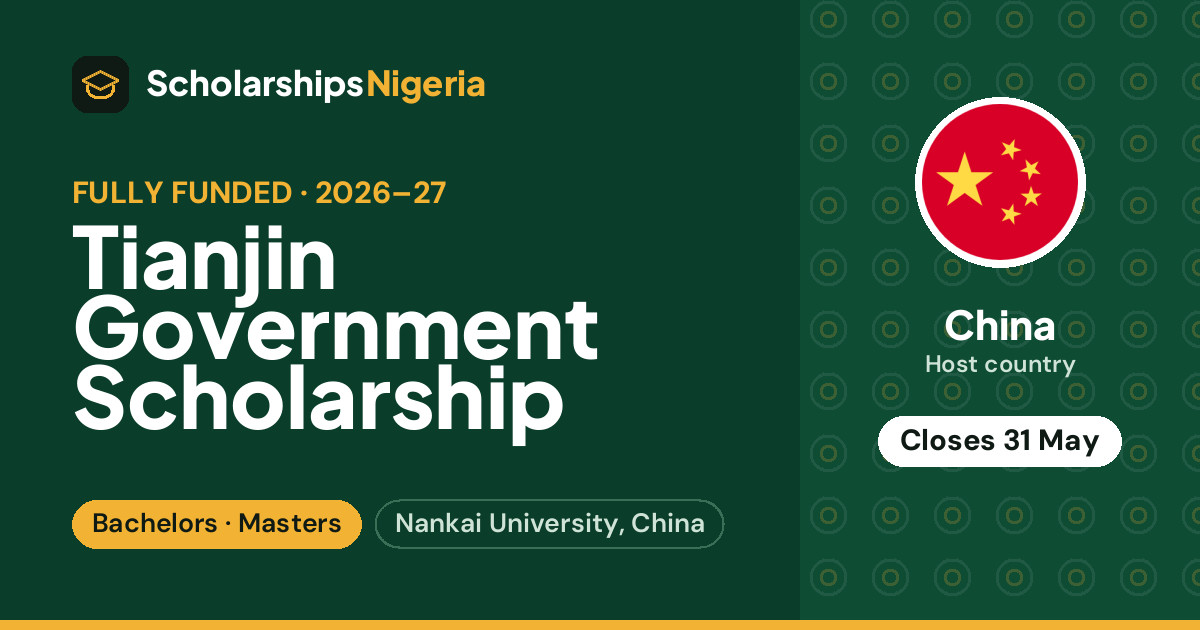
The busiest months are May, with three closing dates, then April with two, then July with one. That clustering matters: if you are applying to more than one Chinese university, your April and May will be heavy, and your transcripts, notarised copies and courier deliveries should be moving in February and March.
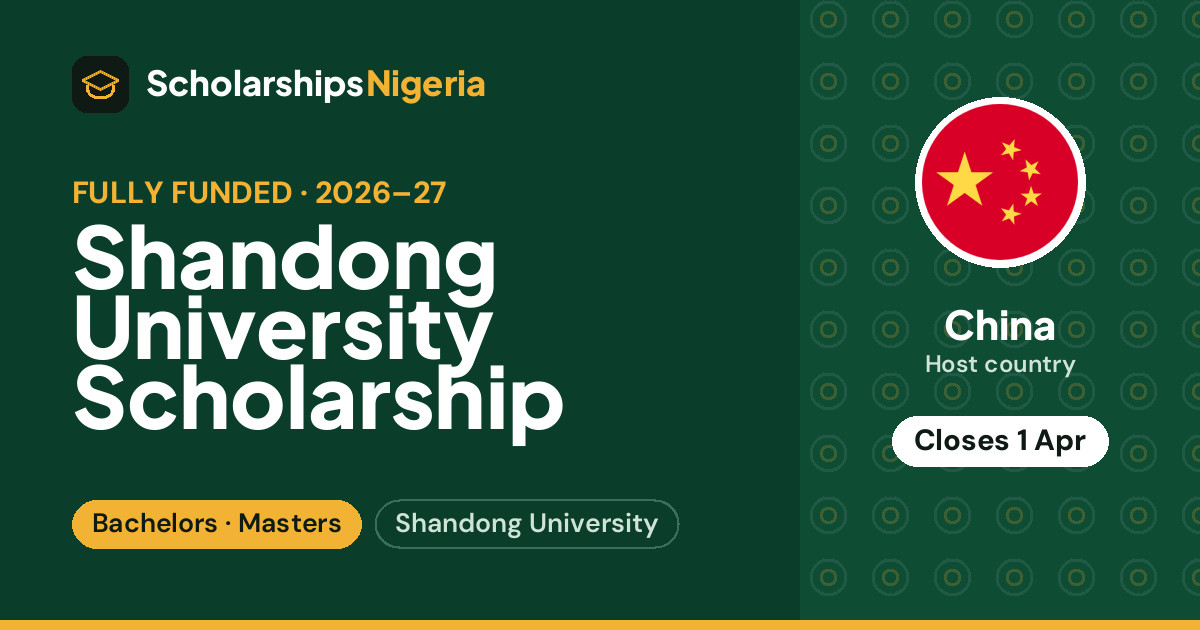
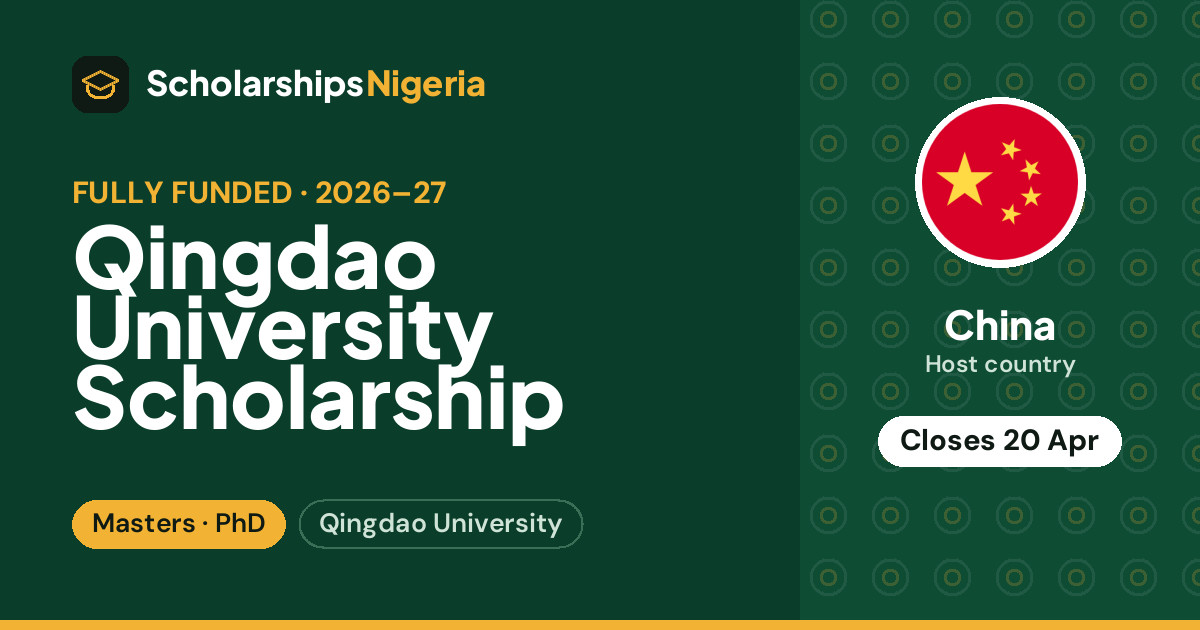
The five awards closing soonest are:
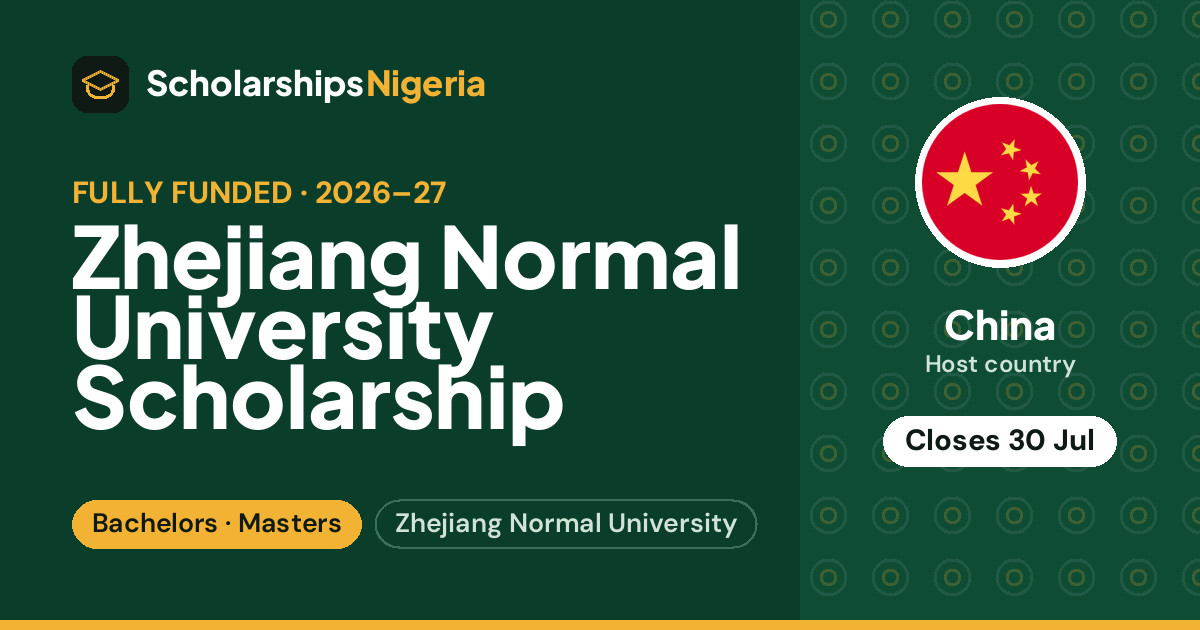
One further award on the page, Zhejiang Normal University Scholarship 2027, closes 30 July and is the latest dated entry in the collection.
Subjects and study duration
The awards on this page cover eight broad fields, each represented by three scholarships: Agriculture, Arts & Humanities, Business & Management, Economics & Finance, Education, Engineering, Law, and Medicine & Health Sciences. That spread is wide enough that most Nigerian master's holders will find a match without changing direction.
Doctoral duration is stated on four of the awards, in different ways. One gives 3 to 4 years. Another gives a doctorate of 4 years, alongside a bachelor's of 4 to 5 years and a master's of 3 years. A third gives a doctorate of 3 years, with a bachelor's of 4 to 6 years and a master's of 2 to 3 years. The fourth describes a bachelor's programme of 4 to 5 years. Plan for three to four years of funding and confirm the exact figure with the department, because laboratory-based doctorates in engineering and medicine often run longer than library-based ones.
What to do next
Start with the two April deadlines, since they come first. Open the Shandong and Qingdao pages, read the eligibility line and the document list, and note whether an admission offer is required before the scholarship application. Then work down the May dates.
In parallel, do three things that no deadline controls. Request your transcripts from your Nigerian university and budget for the courier. Ask your referees for letters, giving them your proposal and CV. And write the research proposal, then email two or three supervisors at each target university whose published work matches it.
Keep a single spreadsheet of the ten awards with columns for deadline, English test requirement, admission offer requirement, and documents sent. Chinese scholarship cycles repeat, so an award you miss this year will very likely return in the next intake — but the transcripts, referees and proposal you prepare now will serve every application on this page.