What this page lists
This collection gathers 9 masters scholarships in China that are open to Nigerian students. Every one of the nine is labelled fully funded by the provider. That is the first thing to understand about this list: it is not a mix of partial bursaries and tuition waivers. Each award on the page states that it covers the full cost of study.
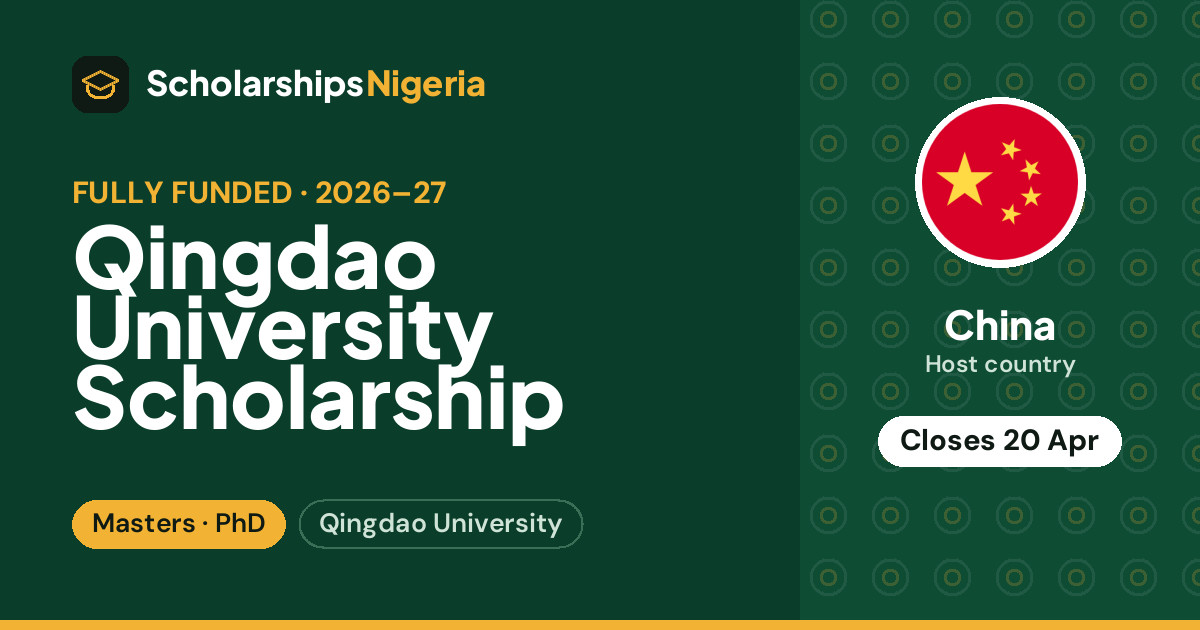
The nine awards come from six named providers, including Peking University, Yangzhou University, Qingdao University and Nankai University. Some are university scholarships. Others are government-linked schemes administered through a host institution. Read each entry on its own terms, because the conditions differ from one to the next.
What the awards pay for
Fully funded sounds straightforward, but the detail matters when you are budgeting from Lagos or Abuja. Of the nine awards, 6 name tuition in their own text, 5 name living costs, 5 name accommodation, and 5 name health insurance. Only 2 name travel, and 1 names research or training costs.
Those counts are what the awards say in writing. They are not a promise that every element is covered in every case, and they are not a guarantee of a particular monthly figure. What they tell you is which awards are explicit about a given benefit and which are silent. If an award does not name travel, treat airfare as your own cost until the provider tells you otherwise.
Because all nine are marked fully funded, the practical question is not whether funding exists. It is which combination of tuition, stipend, housing, insurance and travel a specific award spells out. Check that before you rank your options.
Do Nigerian applicants qualify?
Yes, and the wording is worth noting. All 9 of the 9 awards carry no nationality restriction. None of them names Nigeria or the African region specifically, and none leaves eligibility unstated. In other words, these are open competitions where your nationality is not the barrier. Your academic record, documents and fit with the programme are what decide the outcome.
That distinction matters. A scholarship that names a country or region is usually ring-fenced for applicants from that place. An award with no nationality restriction is open to the full international pool, which means the competition is broader. You are eligible. You are also competing against applicants from everywhere.
The qualification you bring
These are masters awards, so the entry point is a first degree or an HND. On the Nigerian side that means a B.Sc, B.A, B.Eng, LLB, MBBS or HND.
Pay attention to degree classification. Awards at this level usually state a minimum class of degree, and "upper second" corresponds to Second Class Upper (2:1) on a Nigerian transcript. If an award asks for an upper second, a 2:1 is what satisfies it. Whether an HND is accepted is decided by each university, not by this page, so confirm that with the provider before you spend money on transcripts and courier fees.
Both taught and research masters are represented here. If you are applying for a research route, expect the application to look different from a taught one.
What the applications demand
The requirements are where most Nigerian applicants lose time. Across the nine awards, 7 ask for letters of recommendation, 5 ask for an English test score (IELTS or TOEFL), and 3 ask for a research proposal. One asks for work experience. One requires an admission offer first.
Plan around the recommendation letters first. Seven of nine means most of your applications need them, and Nigerian referees are often slow, especially during teaching semesters. Ask early, give your referees the programme details in writing, and follow up.
The English test requirement appears in five of the nine. If you are targeting those, book your test date before you start writing statements, because the score has to be in hand before the deadline, not in progress. For the remaining awards, check the provider's own English requirement rather than assuming a waiver applies.
Three awards want a research proposal. That is a substantial piece of writing. Do not leave it to the final week.
Fields of study on this list
The nine awards span a range of disciplines. The strongest clusters are:
- Arts & Humanities — 4
- Business & Management — 4
- Economics & Finance — 4
- Agriculture — 3
- Education — 3
- Engineering — 3
- Law — 3
- Medicine & Health Sciences — 3
Public Policy & Development and Social Sciences each appear once. If your field sits in the smaller categories, you have fewer options on this page but not none. If it sits in the top three, you have real choice and should compare funding detail across awards rather than applying to all of them.
Deadlines and how they fall
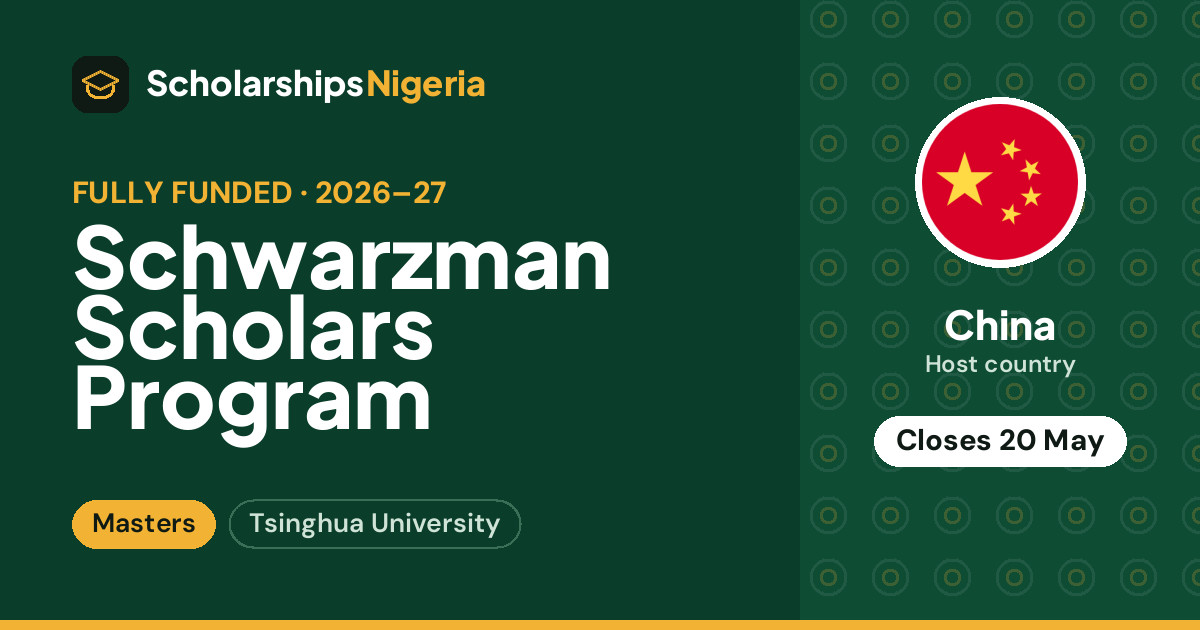
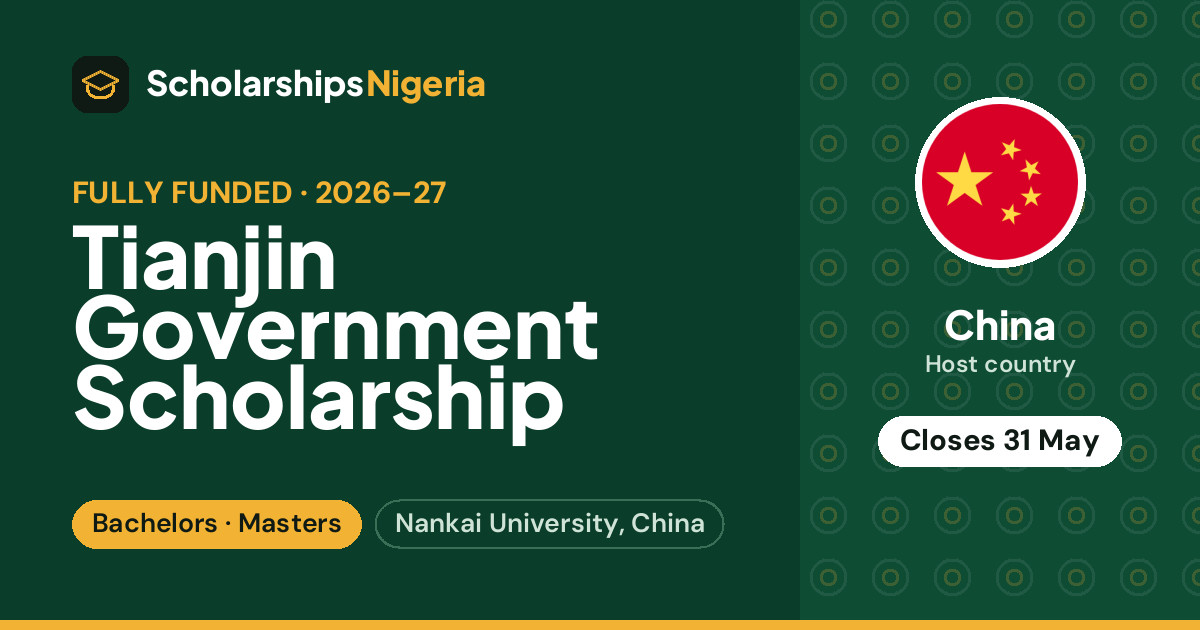
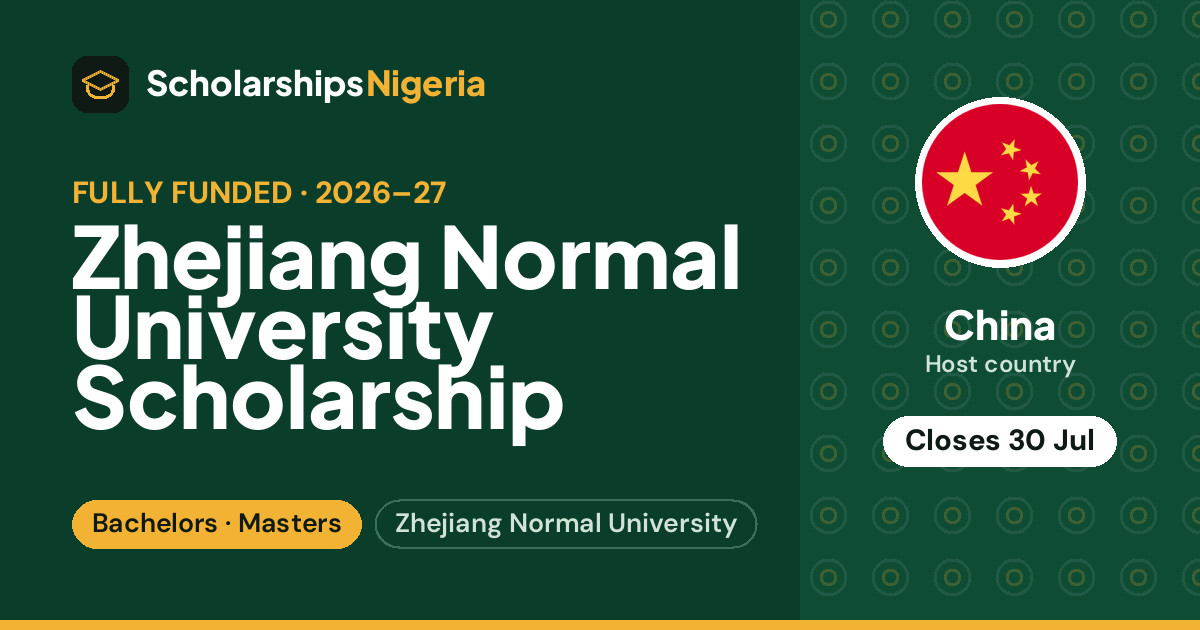
6 of the 9 awards carry a stated deadline and are still open. Three are undated, and six recur annually. May is the busiest month with 3 deadlines, followed by December and April with 1 each.
The awards closing soonest are:
The Yenching Academy award is the nearest deadline by a wide margin. If it interests you, that is the one to work on now. The April and May deadlines give you more room, but recommendation letters and test scores take weeks, so a May deadline is closer than it looks.
Six of the nine recur, which means a missed cycle is not necessarily a lost opportunity. It does mean you should note the month and prepare earlier next time.
What to do next
Start with the Yenching Academy entry if the December deadline is live for you. Then work through the list and shortlist two or three awards where your degree class, field and documents line up.
Before you pay for anything, confirm three things with each provider: whether your class of degree meets the stated minimum, whether an HND is accepted for that particular programme, and whether an English test score is required or can be waived. Get your referees moving early, since seven of the nine awards ask for recommendation letters. Budget for transcripts and courier fees as a real cost, and treat travel as your own expense unless the award names it.
Nine fully funded masters awards in China, all open to Nigerian applicants with no nationality restriction, is a workable shortlist. The work is in the documents, not in the eligibility.