What this page lists
This page collects 12 scholarships in the natural sciences that are open to Nigerian students. They are grouped here because their subject matter sits in the natural sciences, not because they share a funder, a country or a deadline. The awards come from nine countries: Australia, Belgium, the United States, Canada, Germany, Sweden, Switzerland, the United Arab Emirates and the United Kingdom.
The spread of study levels is wide. Six awards are at master's level, five at PhD, three at bachelor's, two are fellowships, one is postdoctoral and one is for high school. Some awards appear at more than one level, which is why the level counts add up to more than the 12 listings.
Six of the 12 are labelled fully funded. Three are labelled partially funded. Three do not state their funding position either way, and this page does not guess at what those cover.
Who can apply
Nine of the 12 awards are open to Nigerian applicants. Of those nine, one names Nigeria or the region in its own eligibility text, and eight carry no nationality restriction at all. The remaining three do not state their eligibility on the award page, so you will need to check the individual listing before you spend money on a transcript or a courier.
That distinction matters when you are paying for documents out of pocket. An award that names no nationality restriction is usually the safer bet for a Nigerian applicant than one whose eligibility text is silent. Read the eligibility section on each listing before you commit to anything.
What the awards pay for
Funding labels on this page describe what the award says in writing. Six are fully funded and three are partially funded. Where an award states its own value, that figure is on the individual listing rather than repeated here, because the amounts differ and some are quoted in the currency of the host country.
Only a small number of the awards name specific benefits in their own text. Two name tuition. One names accommodation. One names health insurance. Those counts tell you what is written down, not what every award on the page provides. If an award does not name a benefit, treat it as unknown and check the listing.
Partial funding is common in the natural sciences, particularly at master's level, and it usually means a contribution towards costs rather than a full ride. Plan for the gap.
What the applications ask for
The requirements stated across these awards are worth reading together, because they tell you what to gather before deadlines arrive.
- Seven awards ask for an English test score (IELTS or TOEFL).
- Six ask for letters of recommendation.
- Three ask for a research proposal.
- Two ask for a minimum degree class.
- Two ask for an admission offer first.
- One asks for work experience.
The English test requirement is the one that catches Nigerian applicants most often. Seven of 12 is a clear majority, so unless the listing you are reading says otherwise, assume you will need a test score and book early. Test slots fill up, and results take time to reach the awarding body.
Where an award asks for an admission offer first, the scholarship application sits behind a university application. That adds weeks to your timeline. Start the admission process before the scholarship window opens, not after.
Two awards name a minimum degree class. If you are applying with a B.Sc or HND, check the exact wording on the listing rather than assuming your class is acceptable.
Deadlines and how they fall
Six of the 12 awards carry a date. Six are still open at the time of writing. Six are undated, and six recur, meaning the same award returns on a similar cycle each year.
The busiest months across this set are February, with two deadlines, then January and May with one each. That concentration means a cluster of applications can land in the same few weeks, so working backwards from February is sensible if you need transcripts, references and a test score.
The awards closing soonest are listed below, in order.
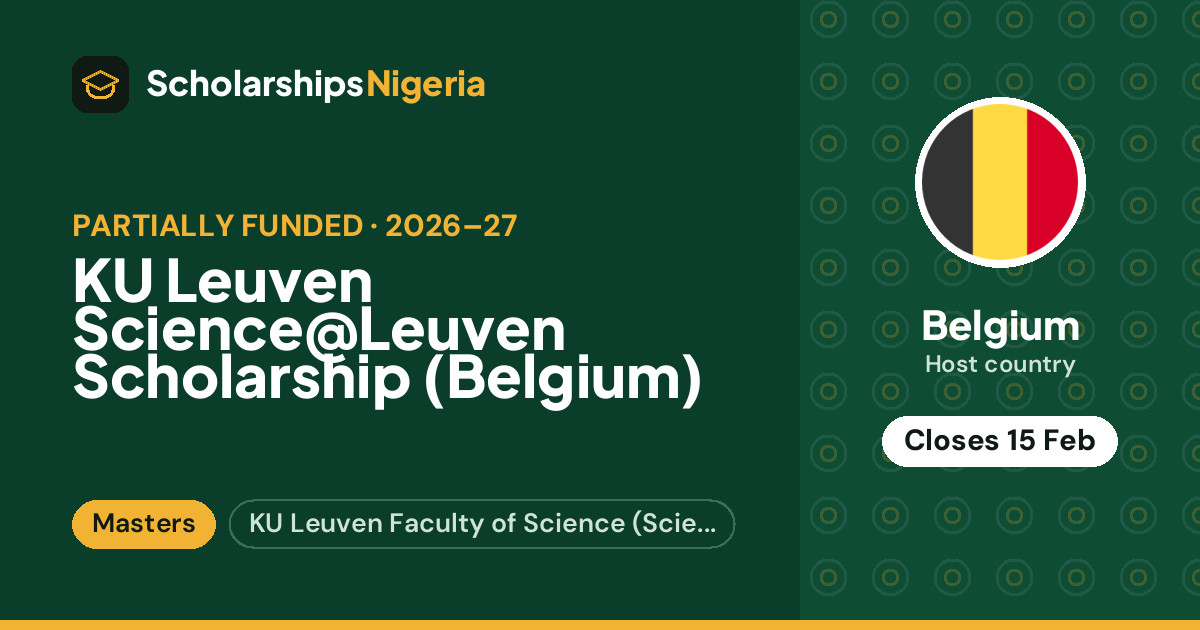
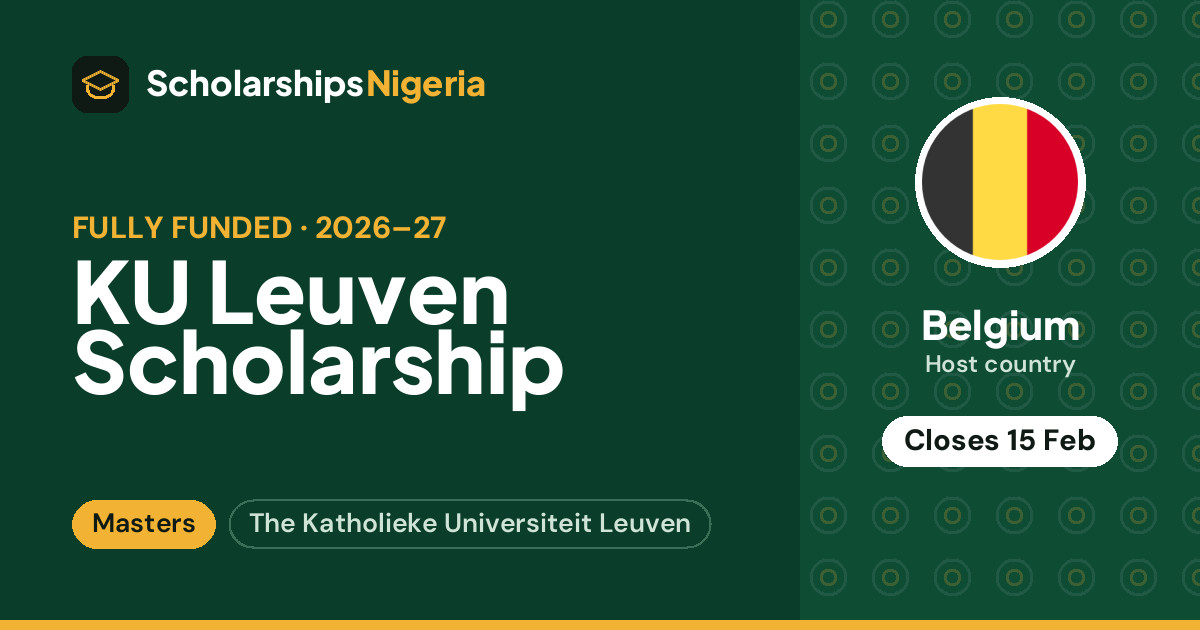
Two of those five close on the same day, 15 February, and both are at KU Leuven. If you are applying to either, prepare one set of documents and check whether the two applications can share it.
Where the awards are
Belgium and Australia each carry two awards on this page. The United States carries two. Canada, Germany, Sweden, Switzerland, the United Arab Emirates and the United Kingdom each carry one.
Belgium's presence is concentrated at KU Leuven, which appears twice. Australia's includes the Monash University – Museums Victoria PhD Research Scholarship, which states two awards per year. That is the only award on this page that gives an award count.
Providers named across the set include the Katholieke Universiteit Leuven, the International Max Planck Research School, École Polytechnique Fédérale de Lausanne (EPFL), Queensland University, Berea College, and a Canadian institution with a quota to host Vanier scholars.
How long the funding runs
Where awards state a duration, the figures vary. Two awards run for four years, one for three years, one for one year, and one describes a 1.5-year master's programme or a 2-year master's programme depending on the route taken.
Duration matters more than the headline funding label for a PhD applicant. A four-year award that covers fees and a stipend is a different proposition from a one-year contribution, even if both describe themselves as funded. Read the duration on the listing alongside the funding label.
What to do next
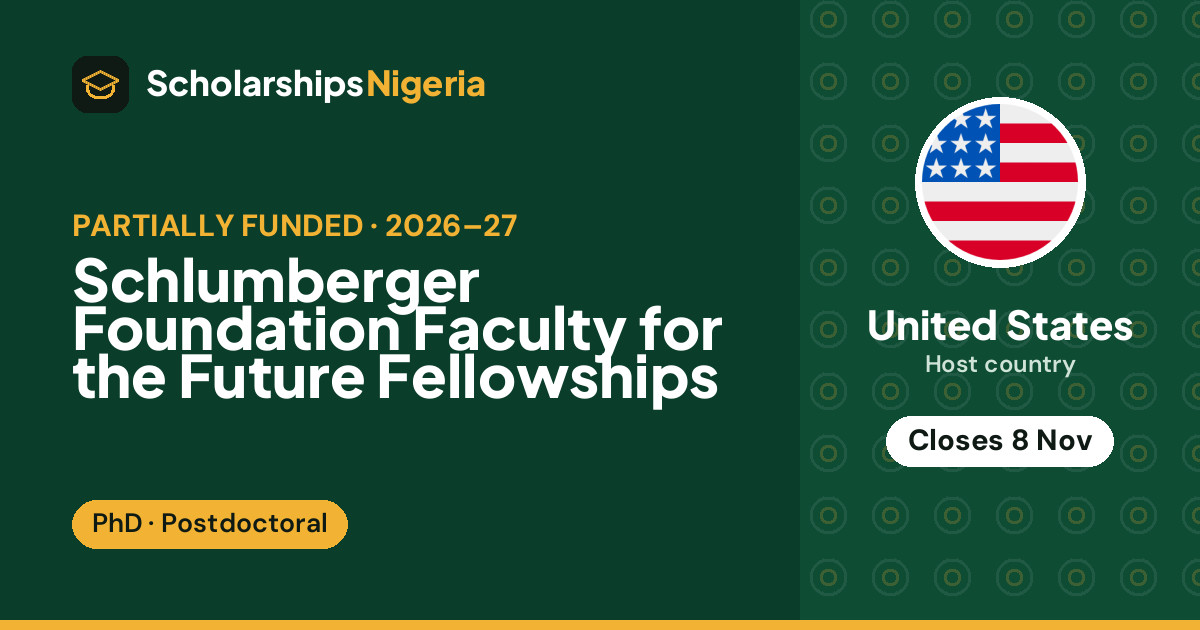
Start with the five awards closing soonest if any of them fit your subject and level. The Schlumberger Foundation Faculty for the Future Fellowships closes first, on 8 November, and sits at PhD and postdoctoral level in the United States.
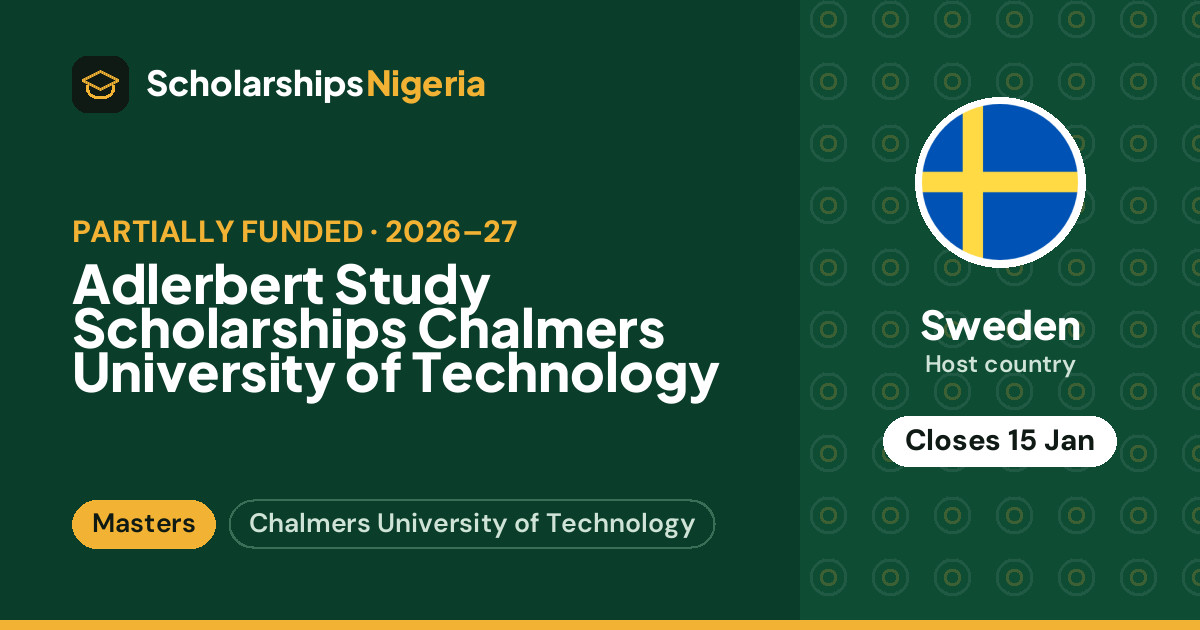
If your target is a master's in the natural sciences, the two KU Leuven awards and the Adlerbert Study Scholarships at Chalmers are the earliest of the dated master's options here. Both KU Leuven listings close on 15 February, so the document-gathering window is roughly the same for each.
Before you pay for anything, open the individual listing and read three things: the eligibility text, the funding label, and the deadline. Three of the 12 awards do not state their eligibility, and three do not state their funding. Where the listing is silent, contact the provider directly rather than assuming.
Finally, work from the requirements list on this page. If the award asks for an English test, a research proposal or an admission offer first, that requirement sets your start date, not the deadline. Nigerian applicants who begin with the test and the references tend to be the ones who are ready when February arrives.