What this page lists
This page gathers 26 scholarships in Arts & Humanities that are open to Nigerian students. Every award here sits in that one field, so you are not scrolling past engineering or medical funding to find a history, philosophy, literature, linguistics, classics, theology or fine art award. The list is built for people applying from Nigeria, and the entries carry the details that matter at application stage: who funds the award, which country it takes you to, the study level, whether funding is stated as full or partial, and the closing date where the provider has published one.
Arts and humanities applicants often assume the money is thin. On this page it is not. Sixteen of the 26 awards are labelled Fully Funded, and three more are labelled Partially Funded. Seven do not state their funding position either way, so treat those as unknown until you read the award page itself.
Where the awards take you
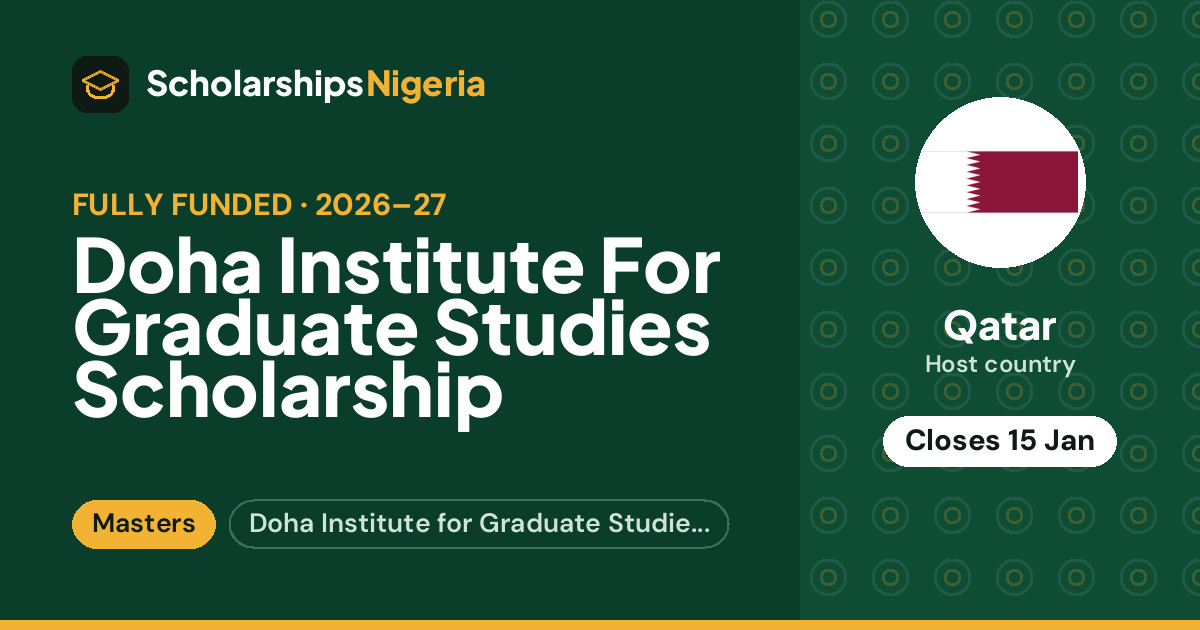
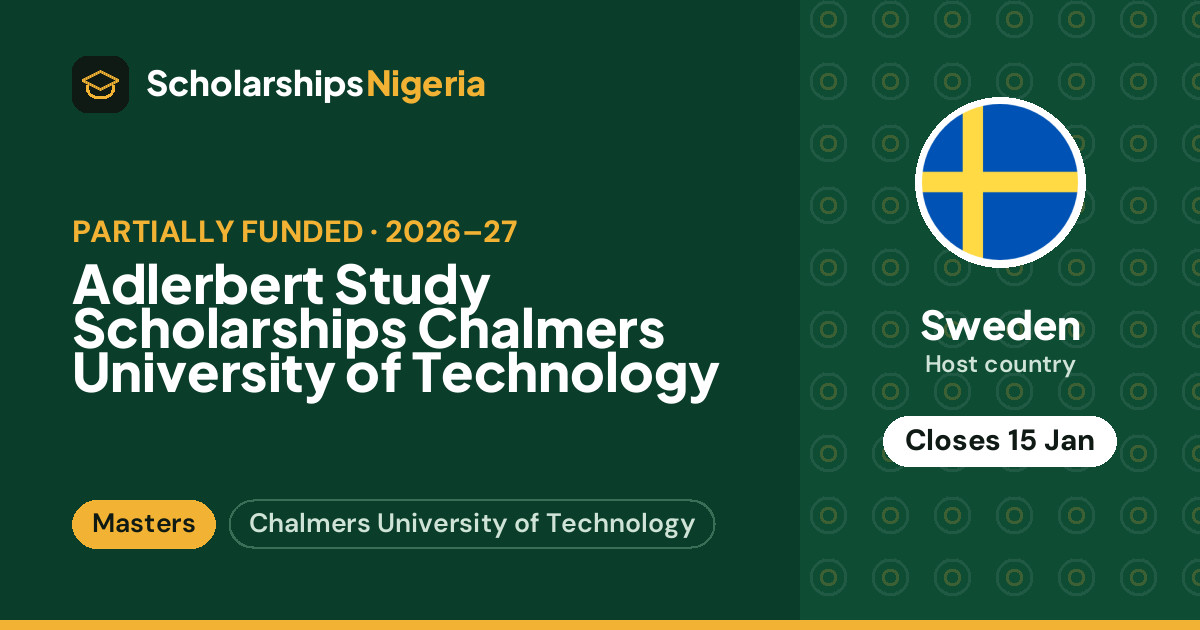
The spread is wide rather than concentrated in one destination. The United States carries five awards, then Australia, China and the United Kingdom with four each. Canada and Germany hold two each, and there is one award each in the Netherlands, Qatar, Romania, Sweden and Switzerland.
That matters for how you plan. A UK or US award usually means a shorter master's and a higher living-cost estimate; a Chinese or Romanian award may stretch further per naira. If your research depends on a specific archive, museum or language environment, the country list is the first filter to apply, before you look at funding at all.
Study levels on this list
Masters is the largest group, with 17 awards. Bachelors and PhD follow with 10 each, then Fellowship with four, Postdoctoral with one, High School with one and Short Course with one. Some awards appear under more than one level, which is why the level counts add up to more than 26.
- Masters — 17 awards
- Bachelors — 10 awards
- PhD — 10 awards
- Fellowship — 4 awards
- Postdoctoral — 1 award
- High School — 1 award
- Short Course — 1 award
For a Nigerian reader, the bachelors entries are the ones to check against WAEC/NECO results and any post-secondary record, while the masters and PhD entries will usually sit on a B.Sc, HND or M.Sc transcript. Where a provider states a minimum degree class, that requirement is written on the award page, not assumed here.
What the awards say they cover
These figures come from what the awards state in their own text. They are not a promise about your particular offer letter.
- Tuition — named by 8 awards
- Living costs — named by 8 awards
- Accommodation — named by 5 awards
- Travel — named by 4 awards
- Research or training costs — named by 4 awards
- Health insurance — named by 3 awards
The pattern is worth reading carefully. Tuition and living costs appear most often, but accommodation, travel and health insurance appear far less. Those three are exactly the costs that catch Nigerian students out, because they fall due before or shortly after arrival and are paid from personal funds. If an award names tuition and living costs only, budget separately for your flight, your first months of rent and your insurance cover.
Do Nigerian applicants qualify?
Of the 26 awards, 19 are open to Nigerians on the face of the listing. Within that group, 18 carry no nationality restriction at all, and 1 names Nigeria or the region specifically. The remaining 7 do not state their eligibility on the award entry, which means you have to open the award and read the provider's own criteria before you spend money on a transcript or a courier.
That last group is the one to handle with care. An award that does not state eligibility is not closed to you, and it is not open to you either. It is simply unconfirmed. Check the provider's page, look for wording about eligible countries or regions, and only then decide whether to apply.
What the applications demand
The requirements below are counted from what the awards state in writing. They tell you what to prepare and roughly how much of it.
- Letters of recommendation — required by 10 awards
- An English test score (IELTS or TOEFL) — required by 8 awards
- A research proposal — required by 6 awards
- An admission offer first — required by 5 awards
- A minimum degree class — stated by 4 awards
- Work experience — stated by 1 award
Two of these shape your timeline more than the rest. First, the five awards that want an admission offer before you apply for funding mean your university application has to go out months earlier than the scholarship deadline. Second, the eight awards that ask for IELTS or TOEFL mean an English test booking, a test date and a result turnaround sit between you and submission. Some providers waive the test where your degree was taught in English, but only where the award says so. Do not assume a waiver; check the award page.
Letters of recommendation are the most common requirement on the list. Approach your referees early, give them your CV, your transcript and a draft of your statement, and give them a date that is at least two weeks before the actual deadline.
How the deadlines fall
Fifteen of the 26 awards carry a published date, and all fifteen of those are still open at the time of writing. Eleven are undated, and fifteen run on a recurring cycle, which usually means the same window opens each year. Where a month is busy, it is October with four deadlines, then December with three and January with two.
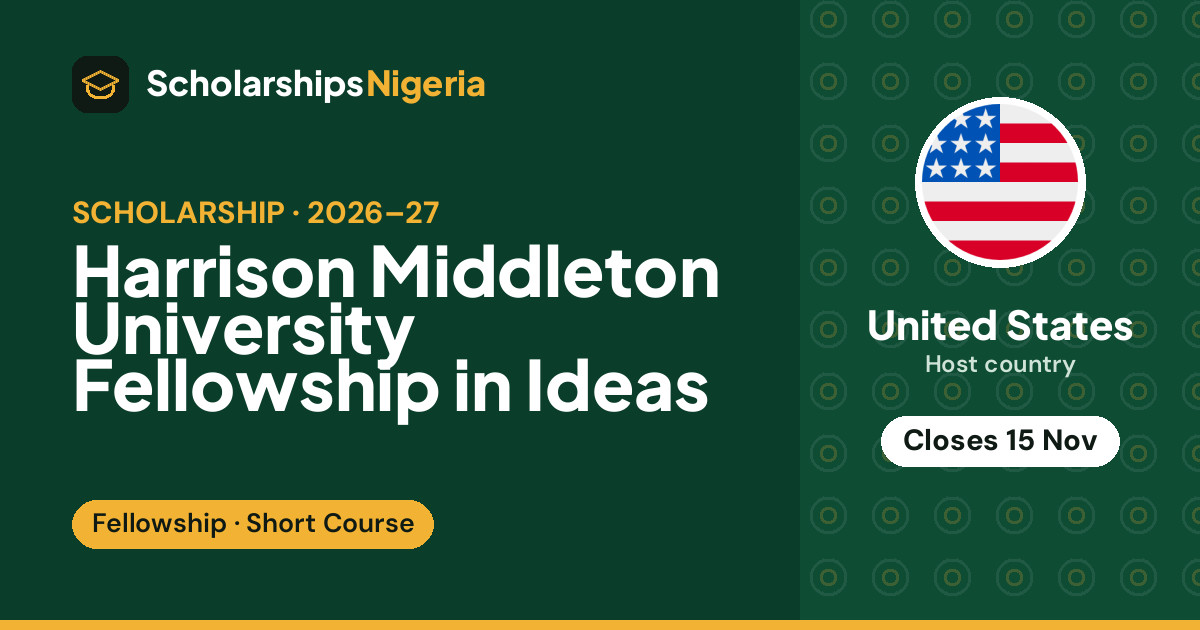
The awards closing soonest are:
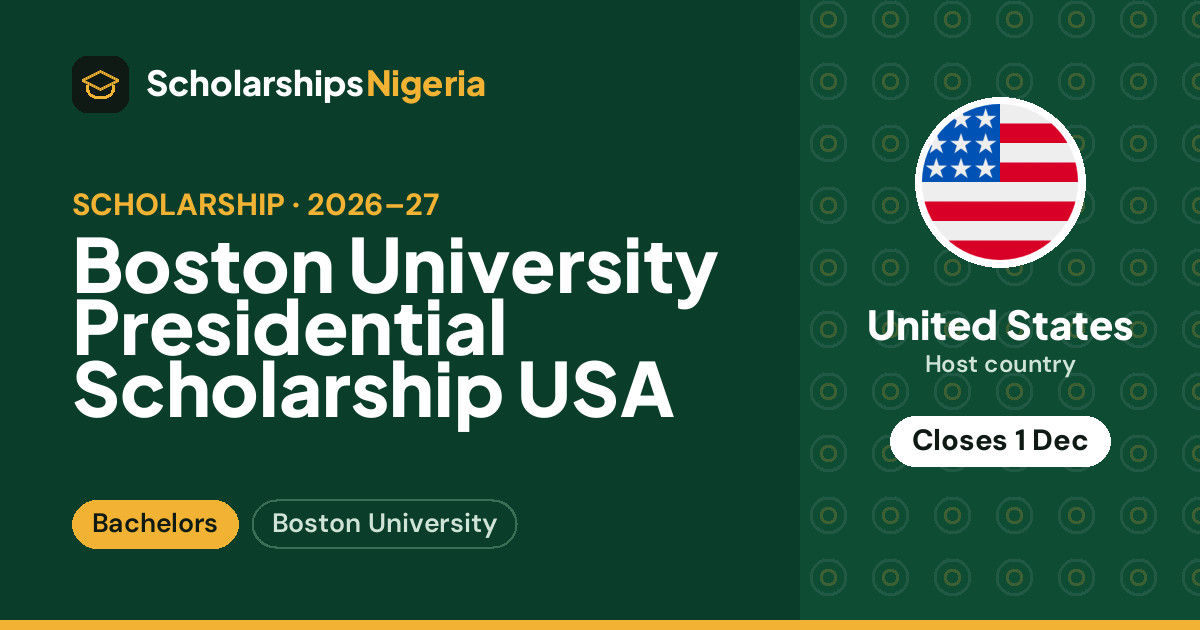
Two more with December dates are worth noting: Boston University Presidential Scholarship 2027 USA, an undergraduate award in the United States, and the Yenching Academy award above, which is a master's route into China.
What to do next
Start with the five awards closing soonest if any of them fit your level and field, because those deadlines are the ones you can still act on. Then work through the rest by country and level.
Before you spend money, confirm three things on each award page: whether Nigerians are eligible, whether the funding is stated as full or partial, and what documents the application asks for. Transcripts, courier fees and English test bookings are real costs, and they add up quickly across several applications. Applying to five awards you have properly checked is worth more than applying to fifteen you have not.
If your field sits closer to social sciences, economics, law or education, the same site carries separate collections for those. Arts and humanities funding is competitive, but with 16 fully funded awards on this list alone, the constraint is usually preparation time rather than the absence of money.