What this page lists
This page collects 10 fully funded undergraduate scholarships in the United States that are open to Nigerian students. Every award listed is tagged Fully Funded, and every one is tagged Bachelors. The United States is the only country represented, so there is no need to filter by destination: whatever you open here, you are looking at an American award.
The list is narrower than it sounds, and that is deliberate. Other levels appear on this site, but not on this page. For context, the wider set of awards we track includes 3 at Masters level, 2 at PhD, 2 at High School, 1 Fellowship, 1 Postdoctoral and 1 Short Course. None of those are counted in the 10 here. If you are still at secondary school and looking for a first degree abroad, this is the correct page.
Why the United States, and why so many Nigerian students go
The United States is the second most popular destination for Nigerian students studying abroad. According to the UNESCO Institute for Statistics, 16,632 Nigerian students were studying there in 2023. That figure covers all levels, not only undergraduates, but it tells you something useful: there is an established Nigerian presence on American campuses, and admissions offices in the United States are used to reading WAEC and NECO results.
For a Nigerian applicant, that matters. Your senior secondary certificate is a document these institutions already understand, and the awards on this page are built around that starting point.
What these awards pay for
Fully funded means different things at different institutions, and the honest answer is that you must read each award page. What the awards on this list state in their own text is as follows:
- Tuition: named by 5 awards
- Accommodation: named by 2 awards
- Living costs: named by 1 award
- Travel: named by 1 award
- Health insurance: named by 1 award
- Research or training costs: named by 1 award
These are counts of what each award says in writing, not a promise about any single one. An award that names tuition only is not necessarily a bad award, but you should plan for the gap. International airfare, SEVIS and visa fees, health insurance where it is not covered, and the first few weeks of settling in are the costs Nigerian families most often underestimate. Treat the award text as the boundary of what is covered.
Can a Nigerian applicant apply?
Of the 10 awards here, 5 are open to Nigerian applicants. The breakdown is worth reading carefully, because it is often misread: of those 5, none names Nigeria or the West African region specifically, and all 5 carry no nationality restriction at all. Those two figures describe the same 5 awards from different angles, not two separate groups.
The remaining 5 awards do not state their eligibility on the award page. That is not a rejection. It means the nationality rule is not written where we can see it, so you would need to check the provider's own documentation before spending money on transcripts or a courier.
Where eligibility is stated, the pattern is open rather than regional. That is good news for a Nigerian applicant, but it also means the competition is global.
What the applications ask for
The requirements the awards state in their own text fall into a small number of categories:
- An English test score (IELTS or TOEFL): 6 awards
- A minimum degree class: 3 awards
- Letters of recommendation: 3 awards
- A commitment to return home afterwards: 1 award
The English test is the single most common requirement, and it is the one that costs money before you have any answer from anyone. Budget for it early. If you studied your secondary education in English, some providers waive the test, but do not assume a waiver: ask the provider directly and get the answer in writing before you book a test date.
Letters of recommendation take longer than people expect. A teacher or principal who taught you two years ago may need reminding of your name and your results. Give them a written summary of your achievements and at least three weeks' notice.
Only 1 award states a return-home commitment. If you see that clause, read it properly. It is a condition, not a formality.
Deadlines and how they fall
Five of the 10 awards carry a stated date. Five are recurring, which usually means the same month comes round every cycle. Five are undated on the award page, so you would need to confirm with the provider.
The busiest months across this list are November (2 awards), then September (1) and March (1). That is a useful shape: if you are planning a cycle, the work clusters in the last quarter of the year.
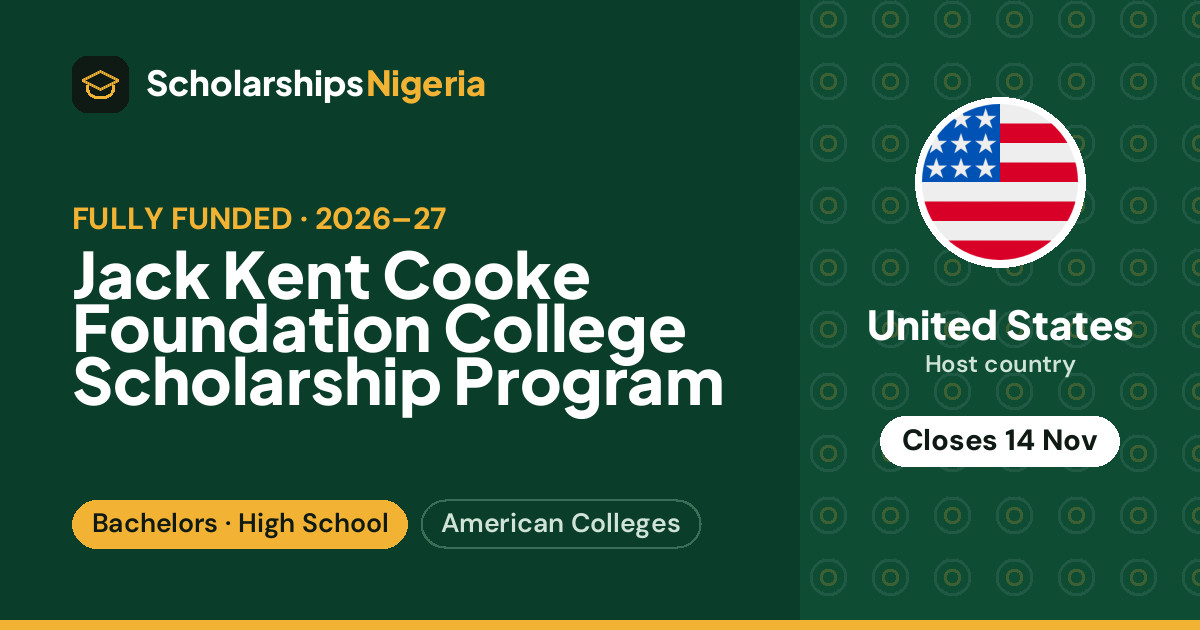
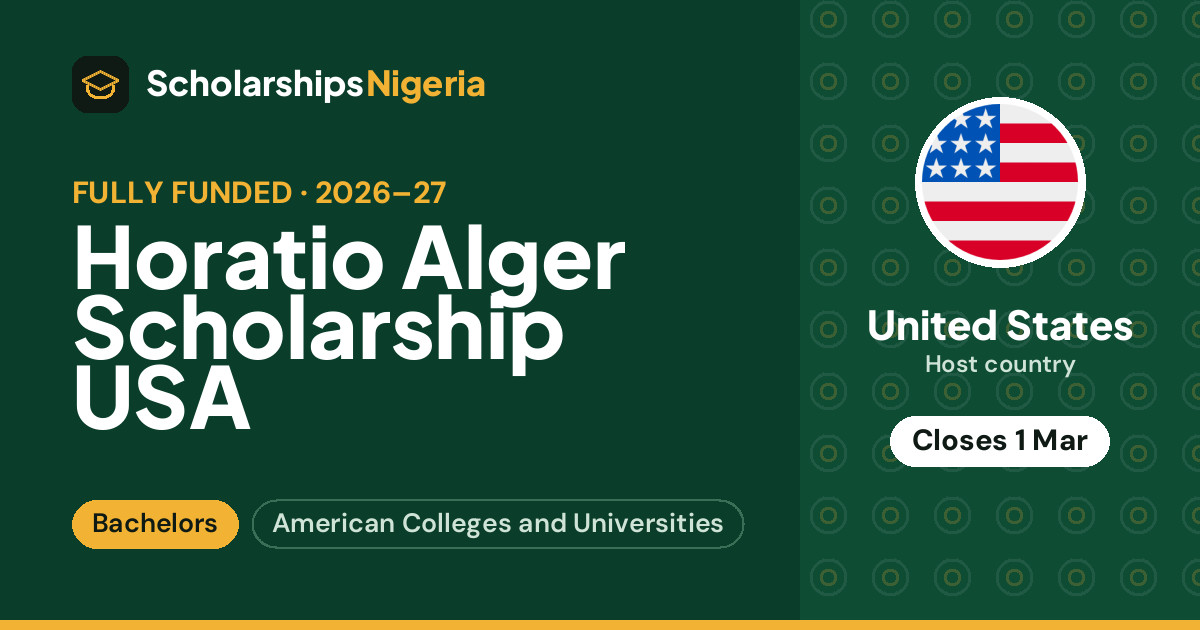
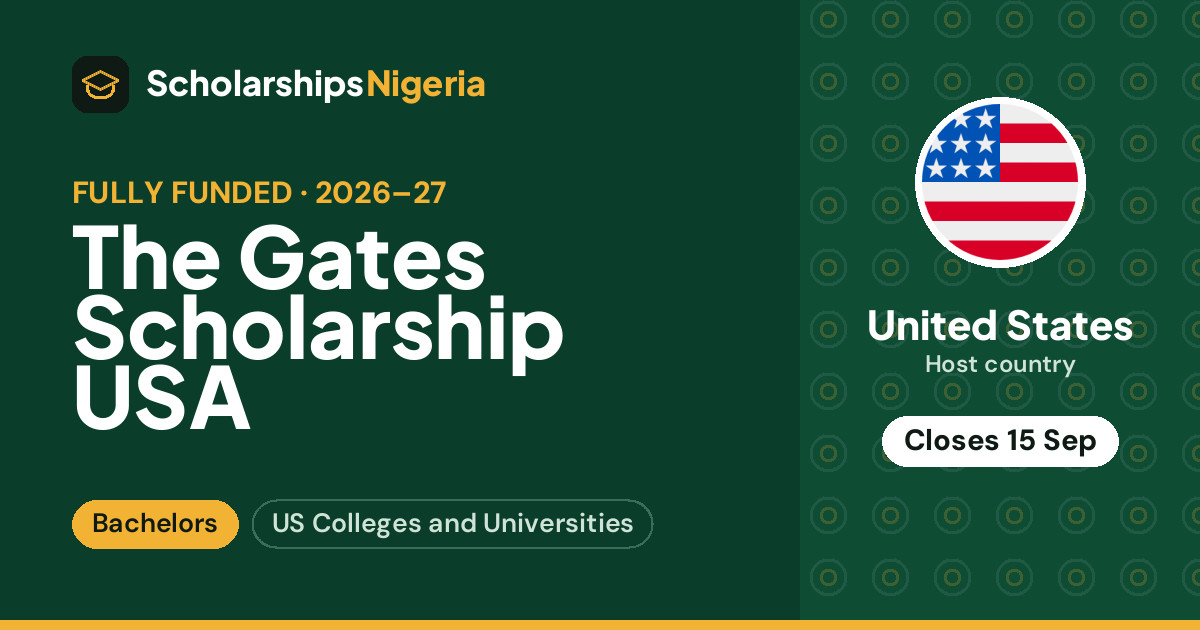
The awards closing soonest are:
One further award on the list, the Global Undergraduate Exchange Program (Global UGRAD) 2027, runs on a December or January deadline that varies by country. It is a non-degree exchange lasting one semester, roughly four to five months, rather than a full degree.
How long these programmes run
Duration varies by award. The stated durations on this list include four years, and four years or longer depending on the major. One award runs for a single semester of four to five months. The distinction matters when you are planning: a four-year award is a commitment to a degree, while a one-semester exchange is a short placement that you return from.
Who provides these awards
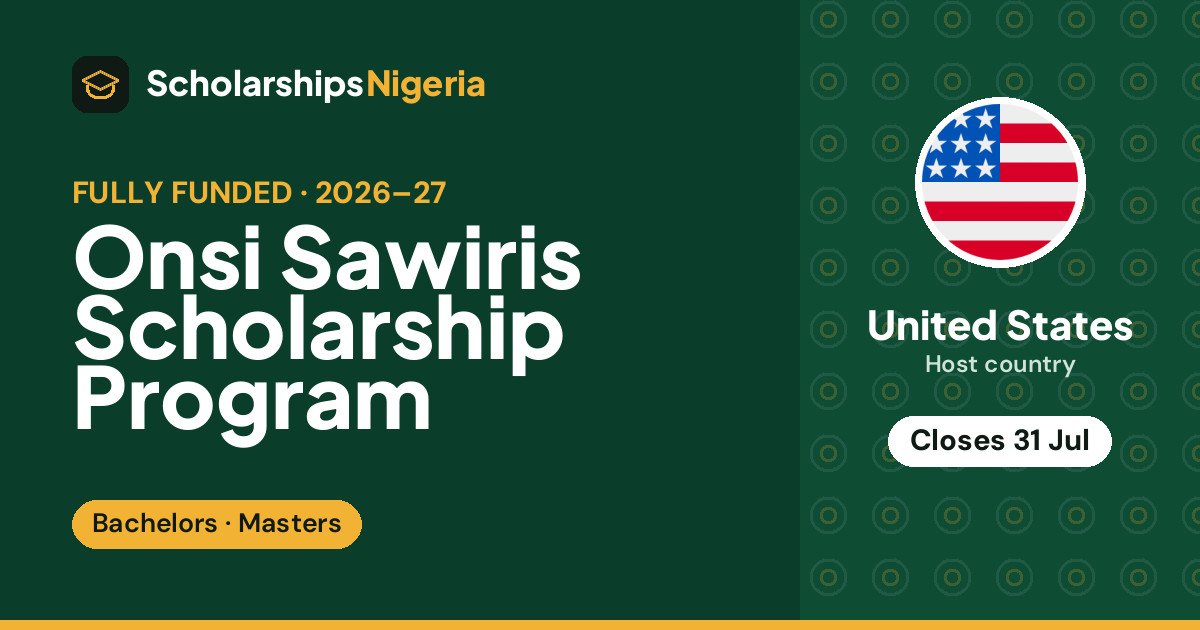
The providers on this list include named institutions and foundations, among them Clark University, Berea College, the ACI Foundation, and a group of American colleges and universities. One award, the Onsi Sawiris Scholarship Program, is associated with Harvard University, Stanford University, the University of Chicago and the University of Pennsylvania.
Where a provider is listed as a group of colleges rather than a single institution, the award may be administered centrally and then matched to a campus. Read the award page to see whether you apply to the programme or to a specific university.
What to do next
Start with the two November deadlines. They are the closest and they will tell you quickly whether your documents are in order.
- Open each award page and read the eligibility section first, before anything else.
- Confirm whether an English test is required, and whether your WAEC or NECO English result can stand in for it.
- Request transcripts and reference letters early. Courier costs from Nigeria are real, and you do not want to pay twice.
- Check whether the award states a return-home condition.
- Note the month each award recurs, so you can plan the next cycle if this one closes before you are ready.
Ten awards is a small list, and five of them are open to you without a nationality restriction. That is workable. Read carefully, apply to the ones that genuinely fit, and keep your documents ready for the next cycle.